






















We dry turmeric and chilli for 400 member farmers now without ever watching the sky. The tunnel dryer paid for itself in one season, and the colour we retain has lifted our market price.
Southwestern India · Service area
Solar dryers, cookers & ovens in Lakshadweep
Solar drying solutions for Lakshadweep’s coconut, copra, tuna, fish and island food processing
Trusted by organisations across India
Quick answer
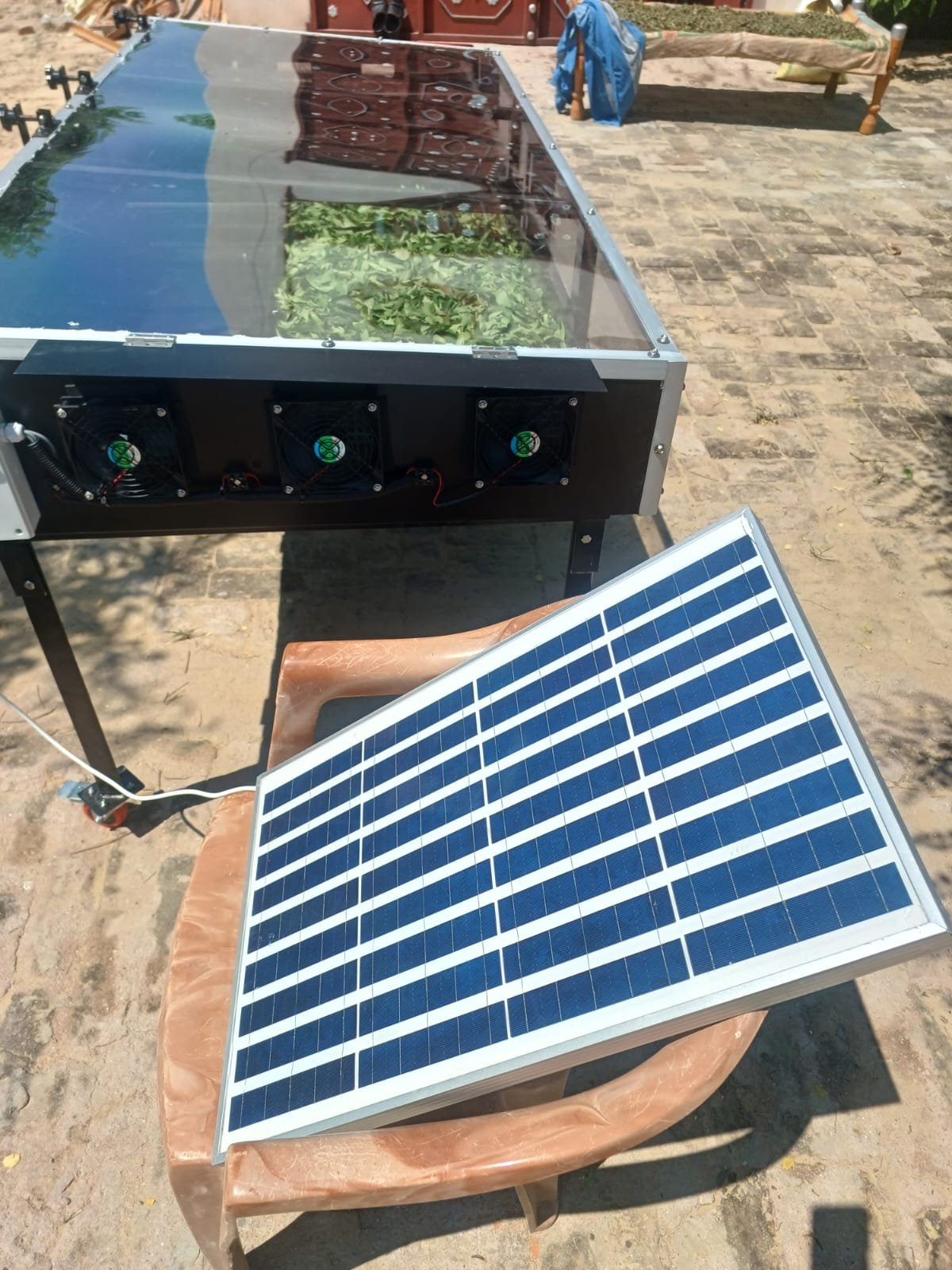
Rudra Solar Energy provides application-based solar drying solutions in Lakshadweep for suitable coconut, copra, tuna, fish, fruits, vegetables and island food-processing applications, with enclosed drying, managed airflow and multiple capacity options.
Lakshadweep has a distinctive island economy in which coconut cultivation and fisheries play central roles. The UT Agriculture Department identifies coconut as its principal agricultural focus, while the Fisheries Department identifies tuna as the primary fishery resource and continues to expand post-harvest and processing infrastructure.
These conditions create focused solar-drying opportunities for suitable coconut and copra products, tuna and other fish applications, along with selected fruits, vegetables and food materials. Enclosed drying with managed airflow can be particularly relevant where processors require protected moisture reduction in a humid coastal environment.
Rudra Solar Energy provides multiple solar dryer capacities and application-specific configurations for island processors, SHGs, fisheries groups and small enterprises. System selection should begin with the commodity, fresh batch quantity, initial and target moisture, tray requirement, available installation space and exact island location.
Solar Drying for Coconut, Copra and Island Value Addition
Coconut is the principal agricultural crop of Lakshadweep and remains central to the islands’ rural economy. The Lakshadweep Agriculture Department specifically supports coconut cultivation and even includes subsidized copra driers under its Coconut Development Programme. For suitable coconut and copra-related applications where controlled moisture reduction is required, an enclosed Rudra Solar Dryer can support protected tray-based processing with managed airflow. The correct process should be selected according to the coconut product, initial moisture, target moisture, loading depth, airflow, ambient humidity and intended final use rather than applying one fixed drying schedule.
Solar Drying for Tuna, Fish and Coastal Food Processing
Fishing is one of Lakshadweep’s most important livelihood activities, and the Fisheries Department identifies tuna as the primary fishery resource of the islands. Fish production reached 16,891 metric tonnes in 2024–25, while current development efforts include cold storage, processing infrastructure and revival of tuna-processing capabilities. For suitable tuna and other fish products where drying forms part of the processing method, an enclosed solar dryer can provide organized tray loading and a more protected environment than direct open drying. Fish species, product thickness, pre-treatment, hygiene, airflow, target moisture and Lakshadweep’s humid coastal conditions must all be considered before defining the process.
Looking for the right system for Lakshadweep?
Browse our solar dryers, cookers, ovens and desalination units — or tell us your crop and we’ll size it for you.
Common questions about solar systems in Lakshadweep
Does Rudra Solar Energy supply and install in Lakshadweep?
Yes — we supply, install and support solar systems in Lakshadweep from our Gujarat base, including remote and off-grid sites. request a quote with your location and requirement.
Which solar systems work best in Lakshadweep?
All four families suit Lakshadweep: solar dryers, solar cookers, solar ovens and solar desalination systems. Tell us your crop or application and we will recommend the right model.
How do I get a quote for a project in Lakshadweep?
Share your application, target capacity and site details and our engineers respond within one working day — request a quote. You can also explore other regions in the locations we serve.
Can solar drying and cooking handle the climate in Lakshadweep?
Yes — India's solar resource supports year-round use, and hybrid backup covers monsoon or cloudy spells. See field results in our success stories.
What is the price of a solar dryer in Lakshadweep?
Solar dryer price depends on the commodity, fresh batch capacity, tray configuration, airflow requirement, construction and any application-specific customization. A coconut-processing unit and a tuna or fish-processing enterprise may require very different configurations even if their fresh batch quantities are similar. For suitable system selection, share the product, fresh batch quantity, installation island and intended final product.
Can a Rudra Solar Dryer be used for coconut and copra in Lakshadweep?
Yes, where controlled moisture reduction is required as part of the coconut or copra-processing method. Coconut is the primary agricultural crop of economic importance in Lakshadweep, and the Agriculture Department actively supports copra-drying infrastructure under its Coconut Development Programme. Important parameters include: Coconut product or form Initial moisture Required final moisture Loading thickness Airflow Ambient humidity Intended storage or processing use A fixed drying condition should not be assumed for every coconut product.
Can tuna be dried using a solar dryer in Lakshadweep?
Potentially, yes, for suitable tuna products where drying is part of the intended processing method. Tuna is identified by the Lakshadweep Fisheries Department as the islands’ primary fishery resource. The drying process should account for: Tuna cut or product form Thickness Pre-treatment Hygiene Initial moisture Target moisture Airflow Ambient humidity Appropriate seafood food-safety practices remain essential throughout processing.
Can other fish and seafood products be processed using solar drying?
Yes, where the particular fish or seafood product is technically suitable for drying. An enclosed system can offer a more protected environment than direct open exposure, but species, size, cut form, pre-treatment, salt or other processing steps where applicable, food safety and required final moisture all need to be evaluated individually. The same drying conditions should not automatically be applied to every fish species.
Can fruits and vegetables also be dried in Lakshadweep?
Yes. Although large-scale agriculture is limited, the Agriculture Department promotes household and backyard cultivation of vegetables and fruits through its Nutri Garden programme, including tomato, brinjal, chilli, sapota, mango and guava. Suitable produce can be processed into dried slices, pieces, flakes or ingredients depending on the product and intended market. Preparation, slice thickness, tray loading and airflow should be selected according to the commodity.
Why is controlled airflow especially important in Lakshadweep?
Lakshadweep has a tropical island environment surrounded by the Arabian Sea, so moisture removal can be influenced by coastal humidity. During drying, airflow helps carry moisture-laden air away from the product. Managed airflow can support: Better movement of humid air Improved air distribution between trays More organized batch processing Reduced dependence on natural wind Drying performance still depends on solar radiation, product moisture, loading and prevailing weather.
What solar dryer capacity is suitable for an island-based processing business?
Capacity should be based on the fresh material loaded per batch. Important inputs include: Product to be dried Fresh batch quantity Initial moisture Required final moisture Product size or preparation Tray-loading depth Daily processing requirement Available installation area Coconut and fish can require very different tray areas and airflow even at the same batch weight.
Can SHGs and small island enterprises use a solar dryer?
Yes. Solar drying can be relevant for SHGs, fisheries groups, women entrepreneurs and small processing enterprises working with suitable coconut products, fish, fruits, vegetables or other value-added materials. Lakshadweep is already supporting community-led fisheries initiatives, including SHG participation in emerging seaweed activities. System size should be matched to the group’s actual product range and batch requirement.
What should be considered before installing a solar dryer on an island in Lakshadweep?
Island installation requires more than selecting only a machine capacity. Important factors include: Available solar exposure Installation area Access for loading and unloading Product handling space Coastal environmental conditions Local transport and logistics Fresh batch requirement Required airflow Routine maintenance access Because Lakshadweep consists of geographically scattered islands, installation planning and logistics should be considered at the project-selection stage.
How long does solar drying take in Lakshadweep?
There is no universal drying time for coconut, fish, fruits or other products. Drying duration depends on: Commodity Initial moisture Target moisture Product thickness Tray loading Airflow Ambient humidity Solar radiation Weather Dryer configuration In Lakshadweep’s coastal environment, humidity can be particularly important. The drying endpoint should therefore be based on the actual product requirement rather than a fixed number of hours.
Explore other states we serve
All locations
Gujarat
Maharashtra
Rajasthan
Madhya Pradesh
Karnataka
Telangana
Andhra Pradesh
Tamil Nadu
Himachal Pradesh
Uttarakhand
Ladakh
Punjab
Bihar
Odisha
Meghalaya
Arunachal Pradesh
Nagaland
Assam
Chhattisgarh
Goa
Haryana
Jharkhand
Kerala
Manipur
Mizoram
Sikkim
Tripura
Uttar Pradesh
West Bengal
Andaman and Nicobar Islands
Chandigarh
Dadra and Nagar Haveli and Daman and Diu
Delhi (NCT of Delhi)
Jammu and Kashmir
Puducherry