
































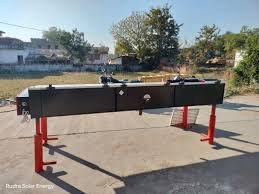
We dry turmeric and chilli for 400 member farmers now without ever watching the sky. The tunnel dryer paid for itself in one season, and the colour we retain has lifted our market price.
Northern India · Service area
Solar dryers, cookers & ovens in Haryana
Powering Haryana’s farms with cleaner, smarter solar drying
Trusted by organisations across India
Quick answer
Rudra Solar Energy provides customised commercial solar drying solutions across Haryana for farmers, Farmer Producer Organizations, Self Help Groups, cooperatives, seed producers, grain businesses and food-processing industries. Systems can be evaluated for wheat, paddy, maize, bajra, mustard, pulses, onion, garlic, potato, tomato, chilli, turmeric, fruits, mushrooms, herbs and other technically suitable agricultural products. Haryana has 22 districts and a significant part of the state falls within the National Capital Region, supporting access to agricultural, processing and commercial markets.
Haryana’s agricultural strength creates substantial opportunities for cleaner post-harvest processing, moisture management and value-added food production. The state’s extensive plains support large-scale cultivation, while its proximity to Delhi, the National Capital Region and major commercial centres provides access to processors, institutional buyers, food businesses and consumer markets.
Traditional open-sun drying may expose grains, vegetables, fruits, spices and herbs to dust, insects, birds, animals, sudden rainfall and changing humidity. Uneven product layers and inconsistent airflow may also cause one part of a batch to dry faster than another, making storage, milling, grinding or packaging more difficult.
A Commercial Solar Dryer in Haryana provides a protected, tray-based chamber where solar thermal energy and organised airflow help reduce moisture from suitable agricultural and food products. Depending on the application, the dryer may operate through natural convection, fan-assisted airflow or a technically suitable hybrid arrangement.
For grain-based applications, Rudra Solar Energy can evaluate solar drying solutions for wheat, paddy, maize, bajra and other suitable cereals. These products may require moisture reduction before storage, milling, grading, seed handling, transportation or packaging. Grain variety, initial moisture, required final moisture, loading depth, airflow and food or seed use must be considered during system selection.
Mustard and other suitable oilseeds may also require moisture reduction before storage, cleaning, grading, seed preservation or oil extraction through separate machinery. The solar dryer does not extract oil; it supports only the required drying or conditioning stage.
Pulse-processing businesses can evaluate drying systems for lentils, chickpeas, green gram, black gram, pigeon peas, field peas and other suitable legumes. Whole pulses do not turn into split dal inside the dryer because dehusking, splitting, polishing and grading require separate processing equipment.
Haryana’s horticulture sector covers fruits, vegetables, flowers, spices, mushrooms, medicinal plants and aromatic plants. This creates opportunities for drying suitable products such as onion, garlic, tomato, potato, carrot, beetroot, peas, chilli, turmeric, ginger, mint, tulsi, lemongrass and other food or botanical ingredients.
Fruit-processing businesses can evaluate solar drying for mango, guava, amla, papaya, banana, citrus peel and other suitable seasonal fruits. Typical preparation may include sorting, washing, peeling, deseeding, uniform slicing, product-specific pre-treatment, draining, tray loading, drying, cooling and moisture-resistant packaging.
Dried fruit or vegetable powder is not produced directly inside the dryer. Properly dried material must undergo separate grinding, sieving and packaging according to the intended final product.
Onion, garlic and strong-smelling spices should be processed in planned batches because odour and residue may remain on trays and chamber surfaces. Thorough cleaning is important before changing to delicate products such as fruits, herbs or bakery ingredients.
Herbs, medicinal leaves, flowers and aromatic plants generally require gentler temperature conditions and thinner tray loading than grains or dense vegetables. Excessive temperature may affect colour, aroma, texture and commercial appearance.
Mushrooms contain high moisture and require quick, hygienic preparation. A product-specific solar or hybrid dryer may support dried mushroom slices, soup ingredients and raw material for separate grinding, subject to appropriate food-safety practices and moisture control.
A properly sized system should be selected according to the exact product rather than only a general kilogram claim. Customers should share their fresh or wet quantity per day, initial moisture, required final moisture, product dimensions, processing season, number of batches, installation area, electricity availability and intended final product.
Fresh input and dried output are different because water and preparation losses are removed during processing. For this reason, tray area, loading thickness and airflow are often more useful capacity indicators than only the external dimensions of the dryer.
Solar drying performance remains influenced by sunlight, humidity, ambient temperature, product preparation and airflow. During cloudy or humid periods, drying time may increase and tray loading may need to be reduced. Businesses requiring night-time or uninterrupted production can discuss technically suitable hybrid heating options.
Rudra Solar Energy provides customised Commercial Solar Drying Solutions in Haryana for individual farmers, FPOs, SHGs, agricultural cooperatives, rural entrepreneurs, seed producers, MSMEs and food-processing industries. Haryana’s official food-processing policy framework also recognises agricultural institutions, cooperatives and FPOs within its agribusiness and food-processing scope.
The recommended configuration can be planned according to the customer’s exact product, daily input, final moisture requirement, project location, available space and future expansion plans. Depending on the agreed project scope, assistance may include system selection, manufacturing, installation coordination, operating guidance and after-sales support.
For a customised recommendation, customers can share the exact crop or product, fresh daily quantity, required dried output, current drying method, district in Haryana, operating season, installation-space dimensions, electricity availability and site photographs or videos.
Cleaner post-harvest processing for Haryana’s agricultural economy
Haryana has extensive level agricultural land and fertile alluvial plains that support large-scale farming across different parts of the state. Its crop and food-processing ecosystem creates regular moisture-management requirements for wheat, paddy, maize, bajra, mustard, pulses, fruits, vegetables, spices, mushrooms, medicinal plants and aromatic crops. Haryana’s Horticulture Department officially works across fruits, vegetables, flowers, spices, mushrooms, medicinal plants and aromatic plants, highlighting the breadth of products that can benefit from systematic post-harvest handling. Rudra Solar Energy provides enclosed, tray-based commercial solar drying solutions that help farmers and processors reduce direct exposure to dust, insects, birds, animals and sudden weather changes associated with traditional open-sun drying. Each system is evaluated according to the exact crop, fresh quantity, initial moisture, required final moisture, available space and intended final product.
From grain drying to value-added food ingredients
Commercial solar dryers in Haryana can support technically suitable applications involving wheat, paddy, maize, bajra, mustard seeds, pulses, onion, garlic, tomato, potato, chilli, turmeric, ginger, fruits, herbs, mushrooms and other agricultural products. Grain and oilseed processors can use product-specific drying systems before storage, milling, seed handling, grading or oil extraction through separate equipment. Fruit, vegetable, spice and herb businesses can prepare dried slices, flakes, culinary ingredients, ready-to-cook mixes and raw material for separate grinding and packaging. Haryana also has an established policy focus on agriculture, horticulture, Farmer Producer Organizations and agro-food processing, making cleaner post-harvest infrastructure relevant to farmers, FPOs, SHGs, cooperatives, MSMEs and commercial food-processing units. The solar dryer performs moisture reduction only; it does not mill grain, extract oil, fry food, roast products or directly manufacture powder.
Looking for the right system for Haryana?
Browse our solar dryers, cookers, ovens and desalination units — or tell us your crop and we’ll size it for you.
Common questions about solar systems in Haryana
Does Rudra Solar Energy supply and install in Haryana?
Yes — we supply, install and support solar systems in Haryana from our Gujarat base, including remote and off-grid sites. request a quote with your location and requirement.
Which solar systems work best in Haryana?
All four families suit Haryana: solar dryers, solar cookers, solar ovens and solar desalination systems. Tell us your crop or application and we will recommend the right model.
How do I get a quote for a project in Haryana?
Share your application, target capacity and site details and our engineers respond within one working day — request a quote. You can also explore other regions in the locations we serve.
Can solar drying and cooking handle the climate in Haryana?
Yes — India's solar resource supports year-round use, and hybrid backup covers monsoon or cloudy spells. See field results in our success stories.
What is a Commercial Solar Dryer, and how can it help farmers and food processors in Haryana?
A Commercial Solar Dryer is an enclosed drying system that uses solar thermal energy and organised airflow to reduce moisture from suitable agricultural and food products. Unlike traditional open-sun drying, products are arranged on trays inside a protected chamber, which helps reduce direct exposure to dust, insects, birds, animals, sudden rainfall and unclean surfaces. For farmers and food processors in Haryana, a commercial solar dryer can support moisture-management applications involving wheat, paddy, maize, bajra, mustard, pulses, fruits, vegetables, spices, mushrooms, herbs, medicinal plants and other technically suitable products. Depending on the product, drying may be required before: Storage Milling Grading Seed handling Grinding through separate equipment Oil extraction through separate machinery Packaging Transportation Further food processing For fruits and vegetables, the system may support the preparation of dried slices, flakes, pieces, ready-to-cook ingredients and raw material for separate powder production. For grains, pulses and oilseeds, it may help reduce moisture before storage or downstream processing. A solar dryer performs moisture reduction only. It does not convert paddy into rice, wheat into flour, mustard into oil, whole pulses into split dal or dried vegetables into powder. Milling, dehusking, oil extraction, grinding, sieving and packaging require separate equipment. The dryer’s performance depends on several factors, including: Product type Initial moisture Required final moisture Daily input quantity Product size or slice thickness Tray-loading depth Airflow Solar radiation Ambient temperature Humidity Processing season Rudra Solar Energy evaluates these requirements before recommending a suitable commercial solar drying system for farmers, FPOs, SHGs, cooperatives and food-processing businesses in Haryana.
Which crops and food products can be dried using a Solar Dryer Machine in Haryana?
A Solar Dryer Machine in Haryana can be evaluated for a wide range of agricultural, horticultural and food-processing applications. However, every product requires its own preparation method, temperature range, loading pattern, airflow and final moisture target. Suitable applications may include: Grains and cereals Wheat Paddy Maize Bajra Other suitable cereals and millets These crops may require drying before storage, milling, grading, transportation or seed preservation. Grain should be loaded at a suitable depth so that airflow can move through or around the material. Seed-quality grain requires careful temperature control to protect germination. Pulses and legumes Chickpeas Lentils Green gram Black gram Pigeon peas Field peas Other whole pulses The dryer may support moisture reduction before storage, dehusking, splitting, milling or packaging. Whole pulses do not become split dal inside the dryer. Mustard and oilseeds Mustard Rapeseed Sesame Groundnut Sunflower seeds Other technically suitable oilseeds Drying may be required before storage, grading, seed preservation or oil extraction through separate machinery. The solar dryer itself does not extract oil. Fruits Mango Guava Amla Papaya Banana Ber Citrus peel Other suitable seasonal fruits Possible outputs may include dried fruit slices, snack ingredients, bakery inclusions, beverage ingredients and raw material for separate grinding. Vegetables Onion Garlic Tomato Potato Carrot Beetroot Peas Okra Cabbage Cauliflower Leafy vegetables Depending on the product, preparation may require washing, peeling, uniform slicing, blanching, draining and thin-layer tray loading. Spices and herbs Chilli Turmeric Ginger Coriander Fenugreek leaves Mint Tulsi Lemongrass Curry leaves Medicinal and aromatic plants Leafy herbs and flowers usually require gentler temperature conditions because excessive heat may affect colour, aroma, texture and appearance. Mushrooms A product-specific solar or hybrid dryer may support dried mushroom slices, soup ingredients and raw material for separate powder production. Hygienic handling, rapid preparation and final moisture control are especially important for mushrooms. The exact suitability of a product should be evaluated before system selection. Customers should share the product name, fresh daily quantity, current moisture, required final product, processing season and present drying method.
What is the Commercial Solar Dryer price in Haryana, and which factors affect the total cost?
The Commercial Solar Dryer price in Haryana is not fixed because the system must be selected according to the product, capacity, airflow, tray area, construction and operational requirements. A small solar dryer for an individual farmer or Self Help Group will have a different cost from a large-capacity system designed for an FPO, cooperative, seed producer or commercial food-processing industry. The total price may depend on: Exact crop or food product Fresh or wet input quantity per batch Daily processing capacity Initial moisture Required final moisture Number of trays Individual tray dimensions Total usable tray area Tray material and mesh Chamber size and construction material Natural or fan-assisted airflow Forced-air circulation requirements Temperature and humidity monitoring Hybrid or auxiliary heating requirements Electrical components Transportation to the Haryana project location Site preparation Installation requirements Operator training Supporting processing equipment After-sales service Future expansion plans Buyers should not compare solar dryers only by external machine dimensions or a general kilogram-capacity claim. A more useful technical comparison includes: Total tray area Recommended loading per tray Product-specific loading depth Airflow configuration Drying-chamber insulation Ease of cleaning Food-contact suitability Monitoring features Installation scope Warranty and service support Fresh input and dried output are also different. Fruits, vegetables and other high-moisture products may lose a significant part of their weight during drying. Therefore, the system should be sized according to actual fresh input, usable tray area and required daily output. For an accurate quotation from Rudra Solar Energy, customers should provide: Exact product Fresh quantity per day Required dried output Current drying method Project district in Haryana Processing months Available installation space Electricity availability Initial and final moisture, if known Site photographs or videos
How does a Commercial Solar Dryer perform during Haryana’s monsoon, winter and cloudy weather?
A Commercial Solar Dryer in Haryana performs best when adequate solar radiation is available, but actual drying time changes according to the season, weather, product moisture, airflow and tray loading. During clear and sunny conditions, the drying chamber can use solar thermal energy to support moisture evaporation. Warm air moves around or through the product, while moisture-rich air must leave the chamber through suitable ventilation or an assisted airflow system. During monsoon, foggy winter mornings or extended cloudy periods: Internal drying temperature may remain lower. Moisture removal may become slower. Total batch time may increase. Products may need thinner tray loading. Air circulation becomes more important. Final moisture should be verified before packaging. Partially dried products should not be stored without proper moisture control. Hybrid or auxiliary heating may be considered for continuous commercial production. A standard solar dryer protects produce from direct rainfall more effectively than open-sun drying, but it is not completely independent of weather. Fans can improve airflow and remove humid air, but fans do not generate heat by themselves. For businesses requiring night-time processing, monsoon operation or fixed daily production throughout the year, Rudra Solar Energy can evaluate a technically suitable hybrid solar drying configuration. The auxiliary heat source, control system and operating method depend on the product and production requirement. Seasonal performance also varies by product. Wheat, paddy and maize may tolerate different conditions from fruits, mushrooms, herbs or leafy vegetables. Delicate materials generally require closer control of temperature, airflow and drying duration. Before system selection, customers should share: Product name Processing months Fresh daily quantity Initial moisture Required final moisture Expected daily output Electricity availability Need for night-time operation Need for uninterrupted production Local project location in Haryana This information helps determine whether a standard solar dryer, fan-assisted model or hybrid system is more suitable.
How should farmers and food processors select the right Solar Dryer Machine capacity in Haryana?
The correct Solar Dryer Machine capacity should be selected according to the actual product and processing requirement rather than only a general kilogram rating. Two businesses handling the same fresh quantity may require different systems because their products can differ in: Moisture content Size and thickness Bulk density Required final moisture Tray-loading depth Drying temperature Airflow requirement Processing duration Final commercial use For example, 100 kilograms of wheat cannot be compared directly with 100 kilograms of mango slices, onion, mushrooms or mint leaves. These products occupy different tray areas and release different amounts of moisture. Customers should provide the following details before capacity selection: Product information Exact crop or food product Whole, sliced, peeled, washed or processed form Variety, where relevant Fresh or wet input quantity Initial moisture, if available Required final moisture Required final product Production information Quantity per batch Quantity per day Number of batches required Processing season Number of operating days Expected dried output Future expansion requirement Product dimensions Slice thickness Piece size Grain-loading depth Leaf-loading density Whether the product can be arranged in a single layer Whether blanching or pre-treatment is required Site information Available installation area Roof or ground installation preference Direction and shading conditions Electricity availability Access for transportation and installation Space for preparation, cooling and packaging Buyers should compare the following technical specifications: Total usable tray area Number of trays Individual tray dimensions Tray material Mesh size Recommended loading per tray Airflow system Temperature-monitoring features Humidity-monitoring features Chamber construction Cleaning access Hybrid heating provision, where required External chamber dimensions alone do not indicate actual drying capacity. Usable tray area and product-specific loading are more practical indicators. Fresh input and dried output should also not be treated as equal. High-moisture fruits and vegetables may lose a substantial portion of their weight during drying. Rudra Solar Energy evaluates these technical and operational details before recommending a suitable dryer size for farmers, FPOs, SHGs, cooperatives and commercial processors in Haryana.
Can a Solar Dryer in Haryana be used for wheat, paddy, mustard, onion, fruits and herbs in the same machine?
A Solar Dryer in Haryana may be designed to process multiple technically suitable products, but every crop should not be dried using the same preparation, temperature, loading depth or operating method. Wheat, paddy, mustard, onion, fruits and herbs have very different characteristics. Wheat and paddy Grains are generally loaded as whole material and may require moisture reduction before storage, milling, grading or seed handling. Important requirements include: Suitable grain-layer depth Uniform airflow Initial and final moisture control Food or seed purpose Protection from excessive temperature in seed applications Mustard and oilseeds Oilseeds may require drying before storage, grading or oil extraction through separate equipment. Excessive heat and unsuitable storage conditions may affect product quality. The solar dryer does not extract mustard oil. Onion and garlic Onion and garlic are strong-smelling products and may leave odour or residue on trays and chamber surfaces. They should be processed in planned batches, followed by thorough cleaning before drying delicate fruits, herbs or bakery ingredients. Fruits Mango, guava, amla, banana, papaya and other fruits generally require: Sorting Washing Peeling where needed Deseeding Uniform slicing Product-specific pre-treatment Thin and even tray loading Cooling before packaging Fruit products normally require more tray area than dense grains for the same input weight. Herbs and medicinal plants Mint, tulsi, lemongrass, fenugreek leaves and other delicate botanical products generally require: Lower or gentler temperatures Thin tray loading Careful airflow Shorter inspection intervals Protection of colour and aroma A multi-product dryer can be practical when the operator follows product-specific procedures. Important precautions include: Do not mix unrelated products in the same batch. Do not dry food and non-food materials together. Clean trays and chamber surfaces between products. Remove strong odours and residues before changing products. Use separate batch records. Follow the appropriate temperature and loading method for each crop. Verify final moisture separately for every product. Avoid cross-contamination. Use product-specific packaging after cooling. In some cases, dedicated trays or separate dryers may be more suitable, especially where a business regularly processes strong-smelling spices, onions, medicinal materials, mushrooms or high-value delicate foods. Rudra Solar Energy can evaluate whether one multi-product solar dryer or separate product-specific systems would be more practical based on the customer’s crop calendar, daily quantity, hygiene requirements and commercial output.
What preparation is required before drying fruits, vegetables, grains, spices and herbs in a Commercial Solar Dryer?
The preparation process depends on the exact product. Correct preparation is essential because a Commercial Solar Dryer reduces moisture but does not automatically clean, peel, cut, blanch, grind or package the material. Fruits Fruits such as mango, guava, banana, papaya, amla and suitable citrus products may require: Sorting and removal of damaged fruit Hygienic washing Peeling where required Deseeding or removal of unwanted portions Uniform slicing or cutting Product-specific pre-treatment Draining surface water Thin and even tray loading Drying Cooling Final moisture checking Moisture-resistant packaging Uniform slice thickness is important. Thin pieces dry faster, while thick pieces may retain moisture internally. Overlapping fruit slices can block airflow and lead to uneven drying. Vegetables Vegetables such as onion, garlic, tomato, potato, carrot, beetroot, okra and leafy vegetables may require: Sorting Washing Peeling Uniform slicing, cubing or shredding Blanching where technically required Draining excess water Product-specific tray loading Some vegetables may require pre-treatment to support colour, texture or storage quality. The correct process depends on the intended final product. A solar dryer does not fry potato or banana chips. Frying requires oil and separate cooking equipment. Grains and pulses Wheat, paddy, maize, bajra, lentils, chickpeas and other whole grains or pulses may require: Cleaning Removal of stones, dust and foreign matter Sorting Moisture measurement Suitable loading depth Periodic mixing or turning where required by the system design Grains should not be washed unless the downstream process specifically requires it. Excessively deep loading can restrict airflow and leave moisture trapped in the lower layers. Mustard and oilseeds Mustard, sesame, groundnut and other oilseeds may require: Cleaning Removal of damaged or foreign material Moisture checking Thin and controlled loading Careful temperature management The solar dryer does not extract oil. Oil extraction requires a separate expeller and filtration system. Spices and herbs Chilli, turmeric, ginger, coriander, mint, tulsi, lemongrass and other herbs may require: Sorting Washing where appropriate Draining Slicing for dense products such as ginger Thin-layer loading Gentle temperature control for leaves and flowers Strong-smelling products should be processed separately, followed by proper cleaning. Important preparation rule The customer should define the required final output before selecting the preparation and drying process. For example: Fresh mango to dried mango slices Fresh onion to onion flakes Fresh turmeric to dried turmeric fingers Fresh mint to dried mint leaves Wet grain to storage-ready grain Dried material to powder only after separate grinding Correct preparation, loading and final moisture control are as important as the dryer itself.
How much drying time does a Solar Dryer Machine take for different crops and food products in Haryana?
There is no single fixed drying time for every product. Drying duration depends on the crop, initial moisture, required final moisture, weather, slice thickness, loading depth, airflow and dryer design. The same product may also require different drying times in summer, winter, monsoon or cloudy conditions. Important factors include: Solar radiation Ambient temperature Relative humidity Initial product moisture Required final moisture Product size and thickness Tray-loading quantity Airflow pattern Natural or fan-assisted circulation Frequency of door opening Product pre-treatment Number of trays in use Hybrid heating availability Grains Wheat, paddy, maize and bajra generally require drying according to their initial moisture and storage or milling requirement. A grain harvested with moderately high moisture may require less time than grain exposed to rain or wet harvesting conditions. Grains loaded in deep layers take longer to dry than grain distributed in thinner, airflow-friendly layers. Fruits Mango, banana, guava, papaya and amla usually require longer drying than leafy herbs because they contain more moisture and are loaded as slices or pieces. Drying time can increase when: Slices are too thick Trays are overloaded Pieces overlap Humidity is high Airflow is restricted Vegetables Onion, tomato, potato, garlic and carrot have different moisture, structure and density. Tomato generally releases substantial moisture, while potato may require blanching and careful slice control. Leafy vegetables usually dry faster than dense root vegetables, but they may require gentler temperatures. Herbs and spices Mint, tulsi, lemongrass and delicate leaves may dry relatively quickly under suitable conditions, but excessive temperature can damage colour and aroma. Turmeric, ginger and other dense products may take longer, especially when pieces are thick. Weather impact During clear summer days: Chamber temperature may increase faster. Moisture removal may be more efficient. Batch time may be shorter. During monsoon, foggy winter mornings or cloudy periods: Chamber temperature may remain lower. Humidity may remain high. Drying may take longer. Loading may need to be reduced. Hybrid support may be useful for fixed production targets. Customers should not rely only on an estimated number of hours. The product should be removed based on actual moisture, texture and final quality requirements. For commercial production, Rudra Solar Energy recommends planning around: Product trials Moisture measurement Batch records Seasonal variation Actual site conditions This provides more reliable production planning than assuming one fixed drying time throughout the year.
Can farmers, FPOs, SHGs and food-processing businesses use one Commercial Solar Dryer as a shared processing facility in Haryana?
Yes. A Commercial Solar Dryer can be installed as a shared processing facility for a Farmer Producer Organization, Self Help Group, cooperative, village-level enterprise, common processing centre or food-processing cluster. A shared system can be useful when several farmers produce seasonal crops but none of them individually has enough daily quantity to operate a large dryer throughout the year. A common facility may process suitable products such as: Wheat Paddy Maize Bajra Mustard Pulses Onion Garlic Tomato Potato Fruits Chilli Turmeric Herbs Mushrooms Other suitable agricultural products However, the shared facility must be planned carefully. Recommended workflow A common processing centre may follow: Collection → weighing → batch identification → sorting → cleaning → preparation → tray loading → drying → cooling → moisture checking → grading → packaging → storage Capacity planning The dryer capacity should be based on: Number of participating farmers Product-wise seasonal supply Realistic daily collection Preparation labour Number of batches Tray-loading capacity Drying duration Packaging capacity Storage space Market demand The total seasonal crop quantity should not be used as the only basis for selecting the machine. Product scheduling A shared facility should maintain a crop calendar. For example: Grain batches during harvesting season Onion and garlic in separate planned batches Fruits during horticultural seasons Herbs and delicate products after thorough cleaning Strong-smelling spices on designated days Products with different temperature, hygiene or odour requirements should not be mixed in the same batch. Record keeping The operator should maintain: Farmer or supplier name Product name Fresh input weight Batch number Loading date and time Drying conditions Final dried quantity Moisture reading where available Packaging details Cleaning records Supporting infrastructure A shared drying centre may also require: Sorting tables Washing area Cutting or slicing equipment Blanching equipment where required Weighing scales Moisture meters Clean cooling area Grinding machinery for powder products Packaging equipment Dry storage space The solar dryer alone does not create a complete food-processing business. Raw-material supply, trained operators, quality control, packaging and market access are also necessary. Rudra Solar Energy can evaluate a suitable shared-facility configuration based on the products, member quantity, crop calendar, available site and required production scale.
Why should farmers and food-processing industries choose Rudra Solar Energy for a Commercial Solar Dryer in Haryana?
Rudra Solar Energy provides customised Commercial Solar Drying Solutions for farmers, FPOs, SHGs, cooperatives, rural entrepreneurs, MSMEs and food-processing businesses in Haryana. The company’s approach is based on the customer’s actual product and processing requirement rather than offering one standard machine for every crop. Product-specific evaluation Before recommending a dryer, Rudra Solar Energy may evaluate: Exact crop or food product Fresh or wet quantity per day Initial moisture Required final moisture Product size or slice thickness Loading depth Processing season Number of batches Required final product Available installation area Electricity availability Need for hybrid operation Future expansion plans This is important because wheat, paddy, mustard, onion, fruits, herbs and mushrooms cannot all be processed using the same loading and operating conditions. Customised capacity and tray planning The system can be planned according to: Total usable tray area Number of trays Tray dimensions Product-contact material Mesh requirement Recommended loading per tray Natural or assisted airflow Cleaning and maintenance needs The focus should remain on practical product capacity rather than only external machine dimensions. Application coverage Rudra Solar Energy can evaluate systems for technically suitable applications involving: Wheat, paddy, maize and bajra Mustard and suitable oilseeds Pulses and legumes Onion, garlic, tomato and potato Mango, guava, amla and other fruits Chilli, turmeric, ginger and spices Mint, tulsi, lemongrass and herbs Mushrooms Other agricultural and food ingredients Cleaner enclosed drying Compared with direct open-sun drying, an enclosed dryer can help reduce direct exposure to: Dust Insects Birds Animals Sudden rainfall Unclean drying surfaces Repeated outdoor handling Actual quality still depends on correct preparation, loading, airflow, final moisture, cooling and packaging. Support for different business scales Solutions can be evaluated for: Individual farmers Small rural enterprises Self Help Groups Farmer Producer Organizations Cooperatives Common processing centres Seed producers Commercial food processors Industrial processing requirements Technical clarity Rudra Solar Energy clearly distinguishes drying from other processing operations. A solar dryer: Reduces moisture Does not mill grain Does not extract oil Does not fry or roast food Does not split pulses Does not automatically grind products into powder Does not replace packaging or storage systems This clarity helps customers plan a complete and realistic processing workflow. For a customised Commercial Solar Dryer recommendation in Haryana, customers should share: Exact crop or product Fresh daily input quantity Required dried output Current drying method Project district Processing season Available installation space Electricity availability Initial and final moisture, if known Site photographs or videos Based on these details, Rudra Solar Energy can evaluate a suitable solar, fan-assisted or hybrid drying configuration for the customer’s actual application.
Explore other states we serve
All locations
Gujarat
Maharashtra
Rajasthan
Madhya Pradesh
Karnataka
Telangana
Andhra Pradesh
Tamil Nadu
Himachal Pradesh
Uttarakhand
Ladakh
Punjab
Bihar
Odisha
Meghalaya
Arunachal Pradesh
Nagaland
Assam
Chhattisgarh
Goa
Jharkhand
Kerala
Manipur
Mizoram
Sikkim
Tripura
Uttar Pradesh
West Bengal
Andaman and Nicobar Islands
Chandigarh
Dadra and Nagar Haveli and Daman and Diu
Delhi (NCT of Delhi)
Jammu and Kashmir
Lakshadweep
Puducherry