


































We dry turmeric and chilli for 400 member farmers now without ever watching the sky. The tunnel dryer paid for itself in one season, and the colour we retain has lifted our market price.
Southern India · Service area
Solar dryers, cookers & ovens in Kerala
Premium solar drying for Kerala’s spices, coconut, fruits and food enterprises
Trusted by organisations across India
Quick answer
Rudra Solar Energy provides customised Commercial Solar Drying Solutions across Kerala for farmers, Farmer Producer Organizations, Self Help Groups, cooperatives, rural entrepreneurs, spice processors and food-processing industries. Systems can be evaluated for coconut, pepper, cardamom, ginger, turmeric, banana, jackfruit, pineapple, mango, papaya, tapioca, vegetables, herbs, coffee, cocoa and other technically suitable agricultural products. Kerala has 14 districts and a highly diverse crop profile that includes food crops, spices, fruits, plantation crops and horticultural products.
Kerala’s agriculture and food-processing sector has strong opportunities for value addition through cleaner and controlled drying. Important products such as coconut, black pepper, cardamom, ginger, turmeric, banana, jackfruit, pineapple, mango, papaya, tapioca, vegetables, coffee, cocoa, herbs and medicinal plants can be evaluated for product-specific solar drying applications.
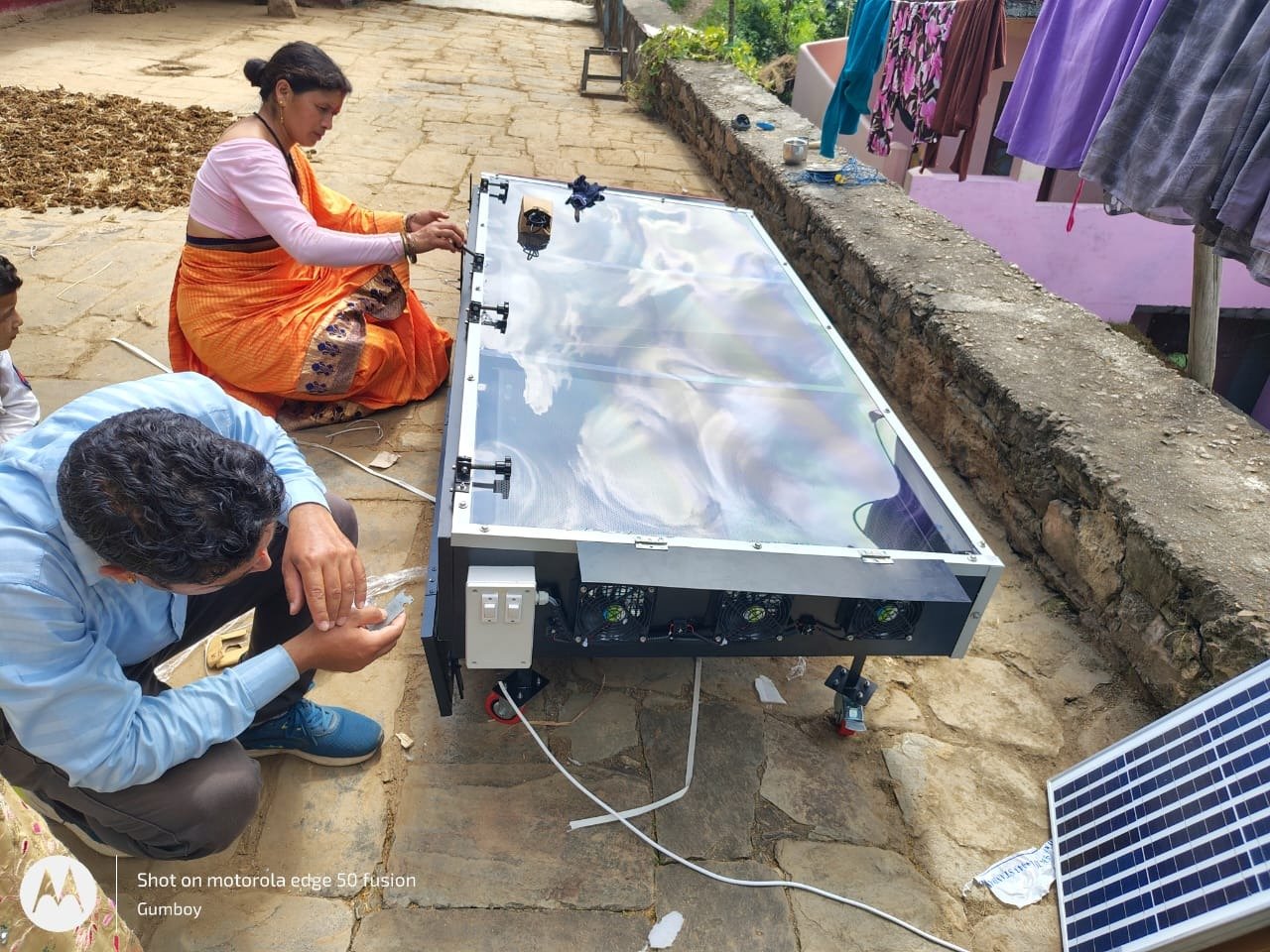
A Commercial Solar Dryer in Kerala provides an enclosed, tray-based system that helps reduce direct exposure to rain, dust, insects, birds, animals and unclean drying surfaces. It can support moisture reduction before storage, packaging, separate grinding or further processing. The dryer only reduces moisture; it does not roast coffee, extract coconut oil, grind spices, fry chips or manufacture powder directly.
Rudra Solar Energy provides customised Commercial Solar Drying Solutions in Kerala for farmers, FPOs, SHGs, cooperatives, rural enterprises and food-processing businesses. Systems can be planned according to the exact product, fresh daily quantity, required final moisture, tray area, airflow, processing season and installation location.
Cleaner drying for Kerala’s high-value agricultural and horticultural products
Kerala has a diverse crop economy involving coconut, paddy, banana, plantain, tapioca, pepper, cardamom, ginger, turmeric, arecanut, cashew, coffee, tea, cocoa, pineapple, mango, jackfruit, papaya, vegetables, mushrooms, medicinal plants and aromatic crops. Kerala’s official agricultural statistics track these crops across the state, while the State Horticulture Mission covers fruits, vegetables, mushrooms, spices, flowers, aromatic plants and plantation crops. This wide product base creates opportunities for farmers, FPOs, SHGs, cooperatives and food-processing businesses to develop cleaner dried ingredients and improve moisture management before storage, packaging, separate grinding or further processing. Rudra Solar Energy provides enclosed, tray-based commercial solar drying systems that help reduce direct exposure to dust, insects, birds, animals, sudden rainfall and unclean drying surfaces commonly associated with traditional open-sun drying. Each system is evaluated according to the exact product, fresh daily quantity, initial moisture, required final moisture, processing season, airflow requirement and intended final output.
From coconut and spices to fruits, coffee and value-added food ingredients
Commercial solar dryers in Kerala can be evaluated for technically suitable applications involving coconut slices and flakes, copra-related moisture reduction, black pepper, cardamom, ginger, turmeric, nutmeg, cloves, banana, jackfruit, pineapple, mango, papaya, tapioca, vegetables, herbs, coffee cherries or beans at suitable stages, cocoa beans at suitable stages and other solid agricultural ingredients. Kerala’s official crop records identify coconut, pepper, ginger, turmeric, cardamom, banana, pineapple, mango, jackfruit, coffee, tea, cocoa and tapioca among the state’s important agricultural products. A properly selected solar dryer can support cleaner moisture reduction, but it does not roast coffee, manufacture tea, extract coconut oil, grind spices, fry chips or automatically produce powder. Those operations require separate equipment and product-specific processing stages.
Looking for the right system for Kerala?
Browse our solar dryers, cookers, ovens and desalination units — or tell us your crop and we’ll size it for you.
Common questions about solar systems in Kerala
Does Rudra Solar Energy supply and install in Kerala?
Yes — we supply, install and support solar systems in Kerala from our Gujarat base, including remote and off-grid sites. request a quote with your location and requirement.
Which solar systems work best in Kerala?
All four families suit Kerala: solar dryers, solar cookers, solar ovens and solar desalination systems. Tell us your crop or application and we will recommend the right model.
How do I get a quote for a project in Kerala?
Share your application, target capacity and site details and our engineers respond within one working day — request a quote. You can also explore other regions in the locations we serve.
Can solar drying and cooking handle the climate in Kerala?
Yes — India's solar resource supports year-round use, and hybrid backup covers monsoon or cloudy spells. See field results in our success stories.
What is the Commercial Solar Dryer price in Kerala?
The Commercial Solar Dryer price in Kerala depends on the product, fresh daily quantity, required final moisture, usable tray area, airflow system and level of automation. A small solar dryer for an SHG processing banana slices or herbs will cost differently from a large commercial system for coconut, spices, coffee, fruits or food-processing industries. The total project cost may vary according to: Exact crop or food product Fresh input per batch and per day Number and dimensions of trays Total usable tray area Food-contact tray material Natural or fan-assisted airflow Temperature and humidity monitoring Hybrid heating requirement Chamber construction and insulation Transportation and installation in Kerala Site preparation and electrical work Operator training and after-sales support Buyers should not compare solar dryers only using a general kilogram-capacity claim. Coconut flakes, black pepper, banana slices, jackfruit, cardamom and herbs require different tray areas, loading depths and operating conditions. For an accurate quotation from Rudra Solar Energy, customers should share the exact product, fresh daily quantity, required dried output, project district, operating season, installation space and electricity availability.
Which Kerala crops and food products can be dried in a Solar Dryer Machine?
A Solar Dryer Machine in Kerala can be evaluated for coconut, spices, tropical fruits, vegetables, plantation crops, herbs and other technically suitable solid products. Common applications may include: Coconut slices and flakes Suitable copra-related moisture reduction Black pepper Cardamom under product-specific conditions Ginger and turmeric Nutmeg, cloves and cinnamon Banana and plantain slices Jackfruit pieces Pineapple, mango and papaya Tapioca and suitable tuber products Onion, garlic, chilli and vegetables Coffee cherries, parchment coffee or beans at suitable stages Cocoa beans after appropriate fermentation Mint, tulsi, lemongrass and curry leaves Medicinal and aromatic plants Mushrooms Every product requires a different preparation and drying process. Fruits and vegetables may need washing, peeling, uniform slicing, pre-treatment and draining before tray loading. Herbs generally require gentler temperatures, while dense products such as ginger, turmeric and tapioca need suitable cutting and airflow. A solar dryer only reduces moisture. It does not extract coconut oil, roast coffee, manufacture tea, fry banana chips, grind spices or directly produce powder. Grinding, roasting, oil extraction and packaging require separate equipment.
Does a Commercial Solar Dryer work during Kerala’s monsoon and humid weather?
A Commercial Solar Dryer in Kerala provides better protection from direct rain than traditional open-sun drying, but its performance remains affected by solar radiation, humidity, airflow, product moisture and tray loading. During Kerala’s monsoon, cloudy days or highly humid conditions: Chamber temperature may remain lower Moisture removal may become slower Drying time may increase Tray loading may need to be reduced Air circulation becomes more important Final moisture must be checked carefully Partially dried products should not be packaged prematurely Fan-assisted airflow can help remove moisture-rich air from the chamber, but fans do not generate solar heat by themselves. Businesses that require fixed daily output, night-time processing, monsoon operation or year-round production may need a technically suitable hybrid solar dryer with an auxiliary heat source. The appropriate configuration depends on the product. Delicate crops such as cardamom, herbs and medicinal leaves require different temperature control from coconut, pepper, tapioca or fruit slices. Rudra Solar Energy can evaluate a standard solar, fan-assisted or hybrid drying system according to the customer’s product, required daily output, operating season and project location in Kerala.
Which solar dryer is suitable for coconut, copra and coconut flakes in Kerala?
The right solar dryer for coconut in Kerala depends on whether the customer is processing fresh coconut slices, coconut flakes, desiccated-coconut raw material or copra-related material. These products have different oil content, moisture levels, piece sizes and final quality requirements, so one standard loading method should not be used for every coconut application. Before selecting a dryer, customers should define: Exact coconut product Fresh quantity per day Slice or flake thickness Initial moisture Required final moisture Number of batches Intended use after drying Packaging method Need for monsoon or night-time operation Fresh coconut slices and flakes usually require hygienic preparation, uniform cutting, suitable tray mesh, controlled airflow and careful cooling before packaging. Overloading trays or using uneven piece sizes can lead to inconsistent drying. For copra-related applications, the exact stage and required final quality should be discussed separately because copra processing differs from drying fresh coconut flakes. A solar dryer does not extract coconut oil or manufacture coconut powder directly. Oil extraction, grinding, sieving and final packaging require separate equipment. Rudra Solar Energy can evaluate a product-specific commercial solar dryer configuration based on the customer’s coconut product, daily capacity and project location in Kerala.
Can black pepper, cardamom, ginger and turmeric be dried in the same Commercial Solar Dryer?
A multi-product Commercial Solar Dryer in Kerala may be used for black pepper, cardamom, ginger and turmeric, but these products should not be processed using the same temperature, loading depth or operating method. Black pepper Black pepper may require controlled drying before grading, storage, packaging or separate grinding. Important factors include initial moisture, layer thickness, airflow, colour and required final moisture. Cardamom Cardamom is a high-value and more sensitive spice. Its colour, aroma and commercial appearance can be affected by unsuitable temperature or airflow. Cardamom may therefore require more careful and product-specific control than pepper or dense spice materials. Ginger and turmeric Ginger and turmeric are denser products and may require washing, slicing, curing or another preparation step before drying. Thick pieces take longer and may retain internal moisture if the tray is overloaded. When one dryer handles several spices: Do not mix different products in one batch. Use product-specific operating settings. Clean trays and the chamber between products. Prevent odour and residue transfer. Maintain separate batch records. Verify final moisture for each spice. Use dedicated trays where necessary. A solar dryer only reduces moisture. It does not grind pepper, cardamom, ginger or turmeric into powder. Grinding, sieving and packaging are separate operations. Rudra Solar Energy can help determine whether one multi-product dryer, dedicated trays or separate product-specific systems would be more practical.
Can a Solar Dryer Machine be used for banana, jackfruit, pineapple and other fruits in Kerala?
Yes. A Solar Dryer Machine in Kerala can be evaluated for banana, plantain, jackfruit, pineapple, mango, papaya and other technically suitable fruits. Potential outputs may include: Dried banana slices Dehydrated plantain pieces Dried jackfruit pieces Pineapple slices Mango slices Papaya pieces Fruit snack ingredients Bakery inclusions Breakfast-cereal ingredients Raw material for separate powder production Fruit preparation may include: Sorting Washing Peeling Deseeding or removal of unwanted parts Uniform slicing Product-specific pre-treatment Draining surface moisture Thin and even tray loading Drying Cooling Final moisture checking Moisture-resistant packaging Uniform slice thickness is important because thin and thick pieces dry at different speeds. Overlapping fruit pieces can block airflow and cause uneven moisture. Raw and ripe jackfruit should not be treated as the same product because their texture, sugar content and intended applications differ. A solar dryer does not fry banana or jackfruit chips. Fried products require oil and separate cooking equipment. It also does not manufacture fruit powder directly; dried material must be ground, sieved and packaged separately. For capacity selection, customers should share the exact fruit, prepared quantity per day, slice thickness, required final product, project district and processing season.
Can coffee, cocoa and tea-related products be processed in a Commercial Solar Dryer in Kerala?
A Commercial Solar Dryer in Kerala can support selected moisture-reduction stages for coffee, cocoa and suitable tea-related materials, but it does not replace the complete processing line. For coffee, possible applications may include drying: Coffee cherries Washed coffee at a suitable stage Parchment coffee Coffee beans before storage or further processing The exact system depends on the coffee variety, processing method, initial moisture, required final moisture and daily quantity. The dryer does not roast coffee or produce coffee powder. Roasting and grinding require separate equipment. For cocoa, solar drying may support moisture reduction after proper fermentation and preparation. It does not perform fermentation, roasting, winnowing, grinding or chocolate manufacturing. Commercial tea production involves specialised stages such as withering, rolling, oxidation where applicable, drying or firing, sorting and packaging. Therefore, a general solar dryer should not be treated as a complete tea-processing machine. Suitable solid herbal tea ingredients such as mint, tulsi, lemongrass, flowers and fruit peels may be dried separately under product-specific conditions. Customers should share: Exact product Current processing stage Fresh or wet daily quantity Initial and required final moisture Existing processing method Required final output Project district in Kerala Rudra Solar Energy can then evaluate whether a standard solar, fan-assisted or hybrid configuration is technically suitable.
How should an FPO, SHG or food processor select the right Solar Dryer Machine capacity in Kerala?
The correct Solar Dryer Machine capacity in Kerala should be selected according to the exact product, fresh daily input, usable tray area and required final moisture—not only a general kilogram rating. For example, 100 kg of black pepper, coconut flakes, banana slices, herbs and mushrooms will not require the same tray area or drying time. Before selecting capacity, buyers should provide: Exact product name Current product form Fresh or wet quantity per batch Daily processing quantity Initial moisture, if known Required final moisture Slice thickness or loading depth Number of daily batches Processing season Required dried output Available installation space Electricity availability Need for monsoon or night-time operation Buyers should compare: Number of trays Individual tray dimensions Total usable tray area Tray material and mesh Recommended loading per tray Natural or fan-assisted airflow Temperature and humidity monitoring Cleaning access Hybrid heating provision Installation and service scope Fresh input and dried output are different because moisture and preparation losses reduce the final weight. For an FPO or SHG, capacity should be based on realistic daily collection from members, available preparation labour, packaging capacity and market demand. An oversized dryer may remain underutilised, while an undersized system may create processing delays during peak season.
Can FPOs, SHGs and cooperatives establish a shared solar drying facility in Kerala?
Yes. A commercial solar drying facility in Kerala can be operated by an FPO, SHG, cooperative, women-led enterprise, rural producer group or common processing centre. A shared system may be used for suitable seasonal products such as: Coconut Black pepper Ginger and turmeric Banana and jackfruit Pineapple and mango Tapioca Vegetables Herbs and medicinal plants Coffee or cocoa at suitable stages Mushrooms A common processing workflow may include: Collection → weighing → sorting → washing or cleaning → preparation → tray loading → drying → cooling → moisture checking → grading → packaging → storage The organisation should prepare a product calendar so that strong-smelling spices, fruits, herbs and other materials are processed in separate batches. Important planning factors include: Number of participating members Product-wise daily supply Seasonal availability Preparation and slicing capacity Drying duration Tray area Clean cooling space Moisture testing Packaging equipment Finished-product storage Buyer or market requirement Operator training Cleaning and maintenance responsibility One dryer may handle multiple products where technically suitable, but products should not be mixed in the same batch. Proper cleaning and separate batch records are necessary to reduce odour transfer and cross-contamination. A solar dryer alone does not create a complete processing business. Raw-material planning, trained operators, packaging, quality control, storage and market access are also required.
Why should buyers choose Rudra Solar Energy for a Commercial Solar Dryer in Kerala?
Rudra Solar Energy provides customised Commercial Solar Drying Solutions in Kerala for farmers, FPOs, SHGs, cooperatives, spice processors, coconut businesses, rural enterprises and food-processing industries. Instead of treating one standard machine as suitable for every product, the system can be evaluated according to: Exact crop or food product Fresh daily quantity Initial and required final moisture Product size or slice thickness Tray-area requirement Airflow requirement Processing season Project location Electricity availability Need for hybrid operation Required final output Future expansion plans Rudra Solar Energy can evaluate systems for technically suitable applications involving: Coconut slices and flakes Black pepper and cardamom Ginger, turmeric and spices Banana, jackfruit, pineapple and mango Tapioca and vegetables Coffee and cocoa at appropriate processing stages Herbs, medicinal plants and mushrooms Other suitable agricultural products The company’s approach focuses on practical equipment selection, customised capacity, installation guidance, operator understanding and after-sales assistance. A solar dryer supplied for commercial use should be compared on more than price. Buyers should verify: Usable tray area Tray material Airflow design Product-specific suitability Monitoring features Installation complexity Training Warranty Service support Genuine project experience For a customised recommendation from Rudra Solar Energy, customers should share: Exact product Current product form Fresh quantity per day Required dried output Present drying method Project district in Kerala Processing season Installation-space dimensions Electricity availability Site photographs or videos Based on these details, Rudra Solar Energy can evaluate a suitable standard solar, fan-assisted or hybrid dryer for the customer’s actual processing requirement.
Explore other states we serve
All locations
Gujarat
Maharashtra
Rajasthan
Madhya Pradesh
Karnataka
Telangana
Andhra Pradesh
Tamil Nadu
Himachal Pradesh
Uttarakhand
Ladakh
Punjab
Bihar
Odisha
Meghalaya
Arunachal Pradesh
Nagaland
Assam
Chhattisgarh
Goa
Haryana
Jharkhand
Manipur
Mizoram
Sikkim
Tripura
Uttar Pradesh
West Bengal
Andaman and Nicobar Islands
Chandigarh
Dadra and Nagar Haveli and Daman and Diu
Delhi (NCT of Delhi)
Jammu and Kashmir
Lakshadweep
Puducherry