





































We dry turmeric and chilli for 400 member farmers now without ever watching the sky. The tunnel dryer paid for itself in one season, and the colour we retain has lifted our market price.
Western India · Service area
Solar dryers, cookers & ovens in Goa
From cashew orchards to coastal produce — cleaner local value addition
Trusted by organisations across India
Quick answer
Rudra Solar Energy provides Commercial Solar Drying Solutions across Goa for farmers, SHGs, FPOs, MSMEs and food-processing businesses. Systems can be planned for cashew, coconut, kokum, mango, banana, jackfruit, pineapple, spices, vegetables and suitable herbs according to product quantity, moisture-removal requirements and required final output.
Goa’s cashew, coconut, kokum, fruit, spice and vegetable sectors create opportunities for cleaner post-harvest processing and locally branded value-added products.
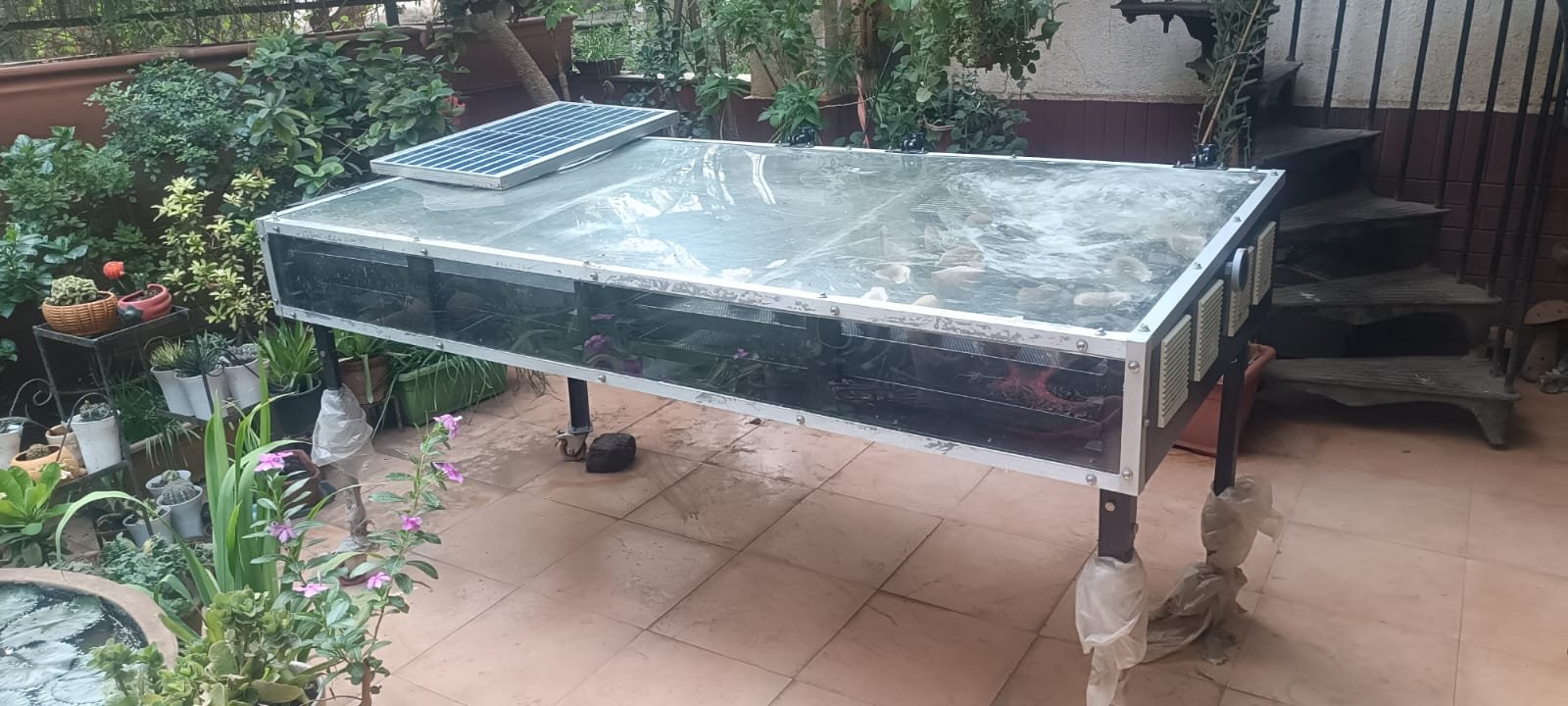
A Commercial Solar Dryer helps suitable agricultural products reduce moisture inside an enclosed, tray-based system while limiting direct exposure to dust, insects, birds, sudden rain and humid coastal conditions.
Rudra Solar Energy provides customised solar drying solutions based on product type, fresh quantity per day, required final output, available installation space and future processing plans.
Cleaner solar drying for Goa’s cashew, coconut, fruits and spices
Goa offers strong opportunities for agricultural and food-processing value addition through products such as cashew, coconut, mango, banana, pineapple, jackfruit, arecanut, kokum, vegetables, chillies and other spices. The Goa Directorate of Agriculture identifies these among the state’s important fruit, plantation, vegetable and spice crops, making post-harvest moisture management relevant for farmers, rural enterprises and food-processing businesses. Traditional open-sun drying may expose agricultural produce to dust, insects, birds, changing humidity and sudden coastal rainfall. Goa’s humid conditions can also slow moisture removal or cause partially dried products to absorb moisture again. Uneven drying may affect cleanliness, colour, aroma, texture, storage suitability and consistency during further processing. A Commercial Solar Dryer in Goa provides an enclosed, tray-based environment where solar thermal energy and organised airflow help reduce moisture from suitable agricultural and food products. Potential applications include cashew-related raw materials at technically suitable stages, coconut slices and ingredients, kokum, mango, banana, jackfruit, pineapple, chillies, spices, herbs and seasonal vegetables. The exact drying method should be selected according to the product. Fruits may require washing, peeling, deseeding and uniform slicing, while herbs and spice materials may need gentler temperature conditions. Coconut, cashew and kokum applications can also differ significantly, so one standard dryer configuration should not be assumed suitable for every product. For better results, the system should be planned according to fresh quantity per day, initial moisture, desired final moisture, tray-loading depth, airflow, installation conditions and required final output. Cleaning, cooling, packaging and storage remain essential after the moisture-reduction stage.
Solar drying solutions for farmers, SHGs, food businesses and coastal enterprises
A Solar Dryer in Goa can support farmers, Farmer Producer Organizations, Self Help Groups, cooperatives, hospitality-linked food businesses, MSMEs and commercial processors seeking cleaner and more organised post-harvest processing. Goa’s agricultural profile creates opportunities for producing dried fruit slices, coconut ingredients, kokum products, dehydrated vegetables, chilli and spice ingredients, herbal materials and other packaged food products. The state’s agriculture strategy identifies rice, cashew, coconut, mango and spices among important crops for productivity and development, while official agriculture resources also highlight kokum and a broad range of horticultural crops. Farmers can use suitable solar drying systems to process seasonal or surplus produce instead of depending entirely on immediate fresh-market sales. Self Help Groups can explore products such as dried banana or mango slices, kokum ingredients, herbal tea materials, dehydrated vegetables, spice mixes and coconut-based ingredients. FPOs and cooperatives can establish shared facilities for collection, sorting, preparation, tray loading, drying, cooling, grading and packaging. Goa’s hospitality and tourism-linked market can also create demand for locally processed, well-presented agricultural products. However, a drying project should begin with a defined product, reliable raw-material supply, suitable packaging and a realistic buyer or market plan. The solar dryer alone does not guarantee sales or profitability. Rudra Solar Energy provides customised Commercial Solar Drying Solutions based on product type, fresh quantity per day, required batch capacity, available installation space and final processing objective. The system can be planned for farmer-level value addition, SHG operations, common processing centres or commercial food businesses, with support for system selection, manufacturing, installation guidance, operator training and after-sales requirements.
Looking for the right system for Goa?
Browse our solar dryers, cookers, ovens and desalination units — or tell us your crop and we’ll size it for you.
Common questions about solar systems in Goa
Does Rudra Solar Energy supply and install in Goa?
Yes — we supply, install and support solar systems in Goa from our Gujarat base, including remote and off-grid sites. request a quote with your location and requirement.
Which solar systems work best in Goa?
All four families suit Goa: solar dryers, solar cookers, solar ovens and solar desalination systems. Tell us your crop or application and we will recommend the right model.
How do I get a quote for a project in Goa?
Share your application, target capacity and site details and our engineers respond within one working day — request a quote. You can also explore other regions in the locations we serve.
Can solar drying and cooking handle the climate in Goa?
Yes — India's solar resource supports year-round use, and hybrid backup covers monsoon or cloudy spells. See field results in our success stories.
What is a Commercial Solar Dryer in Goa, and how can it help farmers, SHGs and food-processing businesses?
A Commercial Solar Dryer in Goa is an enclosed solar thermal drying system designed to reduce moisture from suitable agricultural, horticultural and food products in a cleaner, more organised and tray-based environment. Instead of spreading produce directly on rooftops, courtyards, roadsides, open land or plastic sheets, the prepared material is arranged on clean trays inside a protected drying chamber. Solar heat raises the temperature inside the system, while natural or assisted airflow helps carry released moisture away from the product. This supports a more systematic drying process and reduces direct exposure to dust, insects, birds, animals, sudden rain and other external contamination. A Commercial Solar Dryer can be useful for: Individual farmers Farmer Producer Organizations Agricultural cooperatives Self Help Groups Rural entrepreneurs MSMEs Food-processing businesses Spice processors Fruit and vegetable processors Coconut and kokum product businesses Hospitality-linked local food brands Herbal and beverage-ingredient processors Goa’s humid coastal climate can make traditional open-sun drying difficult. Fresh produce may dry slowly, absorb atmospheric moisture again or require repeated covering and movement when weather changes. Sudden rainfall can interrupt drying, while high humidity can slow moisture removal and affect the final consistency of the product. A protected solar drying system may provide several practical advantages: Cleaner enclosed drying Reduced direct exposure to dust and insects Better protection from sudden rain Organised tray loading Improved airflow around the product Easier batch supervision Reduced dependence on large open-drying spaces Better suitability for packaged products Support for agricultural and food-value addition More professional handling for commercial buyers However, a solar dryer should not be treated as a single universal machine for every product. Cashew-related materials, coconut slices, kokum, mango, banana, jackfruit, pineapple, chilli, herbs and vegetables all have different moisture levels, preparation methods, drying temperatures and final product requirements. For example: Fruits may require washing, peeling, deseeding and uniform slicing. Coconut products may require specific preparation depending on the intended output. Herbs and leafy materials may need gentler drying conditions. Chilli and spices may need suitable tray mesh and careful temperature management. Kokum products may require different handling depending on whether rind, slices or another form is being processed. Cashew applications should be evaluated carefully because the complete cashew-processing chain includes multiple stages, and a solar dryer may only support technically suitable moisture-reduction steps. The dryer is also only one part of the complete processing line. The full workflow may include: Raw-material receiving Sorting Cleaning or washing Peeling, cutting or slicing Product-specific pre-treatment Tray loading Solar drying Cooling Final moisture checking Grading Packaging Storage The quality of the final product depends on all these stages, not only the dryer. Before selecting a Commercial Solar Dryer in Goa, the buyer should identify: Exact product name Fresh quantity per day Required batch capacity Initial moisture Desired final moisture Processing season Available installation area Required final product Packaging plan Storage method Future expansion requirement A correctly planned system can support cleaner drying and value addition, but it should be selected according to the customer’s actual product and commercial objective. Rudra Solar Energy provides customised Commercial Solar Drying Solutions in Goa for farmers, SHGs, FPOs, MSMEs and food-processing businesses. Customers should share their product, fresh daily quantity, project location, required final output and available site details so that a suitable system can be evaluated.
Which agricultural and food products can be processed using a Solar Dryer in Goa?
A Solar Dryer in Goa can be used for moisture reduction in a wide range of suitable fruits, plantation crops, spices, vegetables, herbs, coconut-based materials and selected food ingredients. The exact application depends on the product’s form, moisture level, preparation method, temperature sensitivity and required final output. Goa’s agriculture and food-processing opportunities include products such as cashew, coconut, kokum, mango, banana, jackfruit, pineapple, chilli, spices, vegetables, herbs and medicinal plants. These products can support several value-added applications when they are prepared, dried, cooled, packaged and stored correctly. Coconut products Coconut offers several value-addition opportunities. Suitable applications may include: Coconut slices Dried coconut ingredients Desiccated coconut raw material Coconut flakes Coconut-based snack ingredients Coconut powder raw material after further processing Copra-related moisture-reduction stages where technically suitable The exact drying method depends on the intended final product. Important factors include: Coconut maturity Product form Slice thickness Initial moisture Tray loading Airflow Drying temperature Final moisture Cooling Packaging A coconut slice intended for snack processing may require a different procedure from coconut material intended for further grinding or industrial use. Kokum Kokum has strong local value-addition potential. Suitable applications may include: Dried kokum rind Kokum slices Beverage ingredients Culinary ingredients Spice blends Powder raw material after further processing Packaged traditional food ingredients Kokum should be cleaned and prepared according to the required final product. Important considerations include: Ripeness Rind thickness Surface moisture Tray spacing Drying temperature Final moisture Colour retention Packaging The dried product should be cooled before packaging to reduce condensation. Mango Mango can be processed into: Dried mango slices Mango cubes Mango leather Powder ingredients Snack products Bakery ingredients Beverage ingredients Depending on whether ripe or raw mango is used, the process may involve: Sorting Washing Peeling Deseeding Uniform slicing Pre-treatment Tray loading Drying Cooling Packaging Uniform slice thickness is important because thin and thick pieces dry at different rates. Banana Banana can be used for: Dried banana slices Banana powder ingredients Snack products Bakery ingredients Cereal or food-mix ingredients Banana should be: Properly sorted Washed Peeled Uniformly sliced Loaded without overlapping Dried under suitable conditions Cooled before packaging Solar-dried banana slices should not be presented as deep-fried chips. A solar dryer removes moisture; it does not fry the product. Jackfruit Jackfruit can support several value-added products. Potential applications include: Dried ripe jackfruit slices Dried jackfruit bulbs Raw jackfruit ingredients Powder raw material Packaged snack products Food-processing ingredients The preparation process depends on whether ripe or raw jackfruit is being processed. It may involve: Cleaning Cutting Seed removal Separation of edible portions Uniform sizing Tray loading Drying Cooling Packaging Jackfruit contains significant moisture and has a distinct texture, so the system and process should be selected carefully. Pineapple Pineapple can be processed into: Dried pineapple slices Dried cubes Snack products Powder raw material Bakery ingredients Beverage ingredients Before drying, pineapple may require: Washing Peeling Core removal Uniform slicing Product-specific pre-treatment Tray loading The final product should be checked for consistent moisture before packaging. Cashew-related applications Cashew processing includes several specialised stages. A Commercial Solar Dryer may support technically suitable moisture-reduction steps, but it should not be presented as replacing the complete cashew-processing line. Potential applications must be evaluated according to: Product stage Moisture level Temperature requirement Intended output Food-safety considerations Processing sequence The exact suitability should be confirmed before selecting the dryer. Chilli and spices Suitable spice applications may include: Chilli Ginger Turmeric Black pepper Coriander Curry leaves Selected spice ingredients Possible outputs include: Dried chilli Ginger slices Turmeric slices or fingers Spice raw material Ingredients for grinding Packaged spice components For spices, colour, aroma, appearance and final moisture are commercially important. The dryer should have suitable: Tray mesh Airflow Loading depth Temperature Product spacing Vegetables Suitable vegetable applications may include: Tomato Onion Garlic Potato slices Carrot Beetroot Okra Leafy vegetables Seasonal vegetables Possible final products include: Dehydrated vegetable slices Onion flakes Garlic flakes Vegetable powder raw material Ready-to-cook mixes Food-industry ingredients Some vegetables may require blanching or another pre-treatment before drying. Potato should be treated as a dehydrated slice or ingredient, not as a fried product. Herbs and medicinal plants Suitable products may include: Tulsi Mint Lemongrass Moringa leaves Curry leaves Herbal flowers Medicinal leaves Aromatic plant material Herbal tea ingredients These materials may require gentle drying because excessive heat can affect: Colour Aroma Texture Product identity Commercial quality The tray-loading depth should remain low enough to allow airflow around the leaves. Beverage ingredients A Solar Dryer can also support the processing of solid beverage ingredients such as: Ginger slices Lemon peel Orange peel Mint Tulsi Lemongrass Hibiscus petals Blue pea flowers Kokum Dried fruit ingredients The dryer is used for solid ingredients, not liquid beverages. Do not place: Tea Juice Coffee drink Syrup Liquid concentrate Ready-made beverage inside the solar dryer. The system also does not replace spray drying or instant liquid-to-powder processing. Can one dryer process multiple products? A Commercial Solar Dryer may process different compatible products in separate batches, but proper cleaning is essential. Cross-contamination risks include: Strong odour transfer Spice residue Colour staining Allergens Product particles Moisture residue Garlic, onion, chilli and strong herbs should not be processed casually before delicate fruits or beverage ingredients without a proper cleaning procedure. Before purchasing a Solar Dryer in Goa, customers should share: Exact product Fresh quantity per day Required final product Current processing method Project location Available space Processing season Packaging plan This helps determine whether the application is technically suitable and what configuration may be required.
How should farmers, SHGs and food processors choose the right Commercial Solar Dryer capacity in Goa?
Choosing the right Commercial Solar Dryer capacity in Goa requires careful evaluation of the product, fresh input quantity, moisture-removal requirement, processing season, available space, airflow and desired final output. Capacity should not be selected only by comparing machine dimensions or price. Two dryers that appear similar externally may have different tray areas, airflow systems, loading capacities and practical production outputs. A suitable system should be planned around the complete processing requirement. Identify the primary product The first step is to specify the exact product. Instead of saying: “I need a dryer for food products.” Provide a specific requirement such as: “We want to process 200 kilograms of fresh kokum rind per day.” or: “Our SHG wants to produce dried banana slices from 100 kilograms of fresh banana per day.” The product affects: Tray design Loading depth Temperature Airflow Drying duration Expected dried recovery Packaging requirement Calculate capacity using fresh input Capacity should generally be discussed using the fresh product loaded per batch or processed per day. Customers should identify: Average fresh quantity per day Maximum peak-season quantity Number of batches Working hours Seasonal availability Expected future expansion Fresh input and dried output are not the same. Fruits and vegetables can lose a significant amount of weight because moisture is removed. Therefore, buyers should confirm whether a quoted capacity refers to fresh input, tray load or finished dried output. Understand the product’s moisture level Different products contain different amounts of moisture. For example: Fresh fruits may have high moisture. Leafy herbs may be light but require large tray area. Coconut products may require a different moisture-removal plan. Spices may need more careful temperature control. Grains may need greater loading volume. Important information includes: Initial moisture Required final moisture Product thickness Expected final texture Intended storage period Final commercial use Where exact moisture data is unavailable, the buyer should at least describe the product form and expected output. Consider product preparation Preparation directly affects capacity and drying consistency. The process may include: Sorting Washing Peeling Deseeding Cutting Slicing Blanching Pre-treatment Draining Tray loading Uniform sizing is important. For example, mango or banana slices of different thicknesses will not dry at the same rate. Overlapping slices can trap moisture and reduce airflow. The dryer capacity should match the business’s ability to prepare the product. Evaluate total tray area The number and size of trays are major capacity factors. Buyers should ask: How many trays are included? What are the tray dimensions? What is the total usable tray area? What material is used? Is the mesh suitable for the product? What loading depth is recommended? Are the trays removable? Are they easy to clean? Leafy herbs may require more tray area despite having lower weight. Dense products may have a different loading pattern. Therefore, kilograms alone do not always describe practical capacity accurately. Understand airflow Heat alone cannot complete drying. The moisture released from the product must be carried out of the chamber. Poor airflow may cause: Slow drying Wet spots Uneven batches Condensation Over-drying in one area Moisture retention in another area The buyer should understand whether the system uses: Natural airflow Forced airflow Fans Adjustable vents Air-inlet and outlet arrangements Goa’s humid climate makes moisture removal and ventilation especially important. Consider temperature sensitivity Different products require different drying conditions. Sensitive products may include: Herbs Flowers Kokum Delicate fruits Beverage botanicals Medicinal leaves High-value spices Excessive temperature may affect: Colour Aroma Texture Taste Product appearance Final commercial quality The manufacturer should understand the intended output before recommending the system. Plan for humid and rainy conditions Goa’s coastal climate can affect drying performance. Buyers should consider: Seasonal rainfall Relative humidity Sunlight availability Cloudy periods Processing months Need for year-round operation Backup-energy availability A natural solar dryer may take longer during cloudy or humid weather. Customers requiring more consistent production should discuss whether forced airflow or a hybrid arrangement is appropriate. Do not assume that every solar dryer is completely weather-independent. Assess installation space The available site should support: Sunlight exposure Minimum shading Proper drainage Stable foundation Loading and unloading Cleaning Maintenance Raw-material preparation Product cooling Packaging Storage The dryer should not be placed where trees, buildings or structures block sunlight for a large part of the day. The site should also remain accessible during rain. Match dryer capacity with preparation capacity The complete processing line should be balanced. A typical workflow may be: Receiving → sorting → washing → peeling → slicing → tray loading → drying → cooling → packaging → storage If an SHG can prepare only 80 kilograms of fruit per day, purchasing a system designed for a much larger daily input may create underutilisation. Similarly, if packaging capacity is too low, dried products may remain exposed after processing. Capacity planning for SHGs Self Help Groups should calculate capacity according to: Number of active workers Daily raw-material availability Product-preparation ability Number of trays they can manage Packaging capacity Sales volume Storage area Working capital A smaller, well-utilised system may provide better practical value than a large machine that remains underused. Capacity planning for FPOs FPOs should not calculate capacity only from the total crop grown by all members. They should identify: Number of members actually supplying produce Daily collection quantity Seasonal crop availability Crop-wise processing schedule Common facility operating hours Labour availability Buyer demand Packaging and marketing ability The FPO should decide whether the dryer will process one primary product or several compatible products during different seasons. Capacity planning for commercial food processors Food-processing businesses should evaluate: Daily raw material Number of shifts Preparation-line speed Tray-loading time Drying duration Cooling space Packaging speed Storage requirement Product-changeover time Cleaning time The dryer should fit into the complete production workflow. Compare complete technical quotations Before finalising a dryer, compare: Fresh input capacity Total tray area Number of trays Tray material Chamber construction Airflow system Power requirement Monitoring features Installation scope Transportation Operator training Maintenance guidance After-sales support Future expansion provisions The lowest quotation may not always include the same technical scope. Information required for a suitable recommendation To receive an appropriate Commercial Solar Dryer recommendation in Goa, customers should share: Exact product name Fresh quantity per day Required batch capacity Initial moisture, if known Desired final moisture Required final product Project location Available installation area Processing season Current drying method Packaging plan Power availability Site photographs or videos Future expansion requirement Rudra Solar Energy evaluates these details before recommending a suitable configuration. A properly selected system should match the product, daily quantity, labour, site and market plan. This helps reduce the risk of purchasing an undersized or unnecessarily oversized dryer.
How can FPOs, Self Help Groups and rural entrepreneurs use a Commercial Solar Dryer in Goa for value-added food products?
Farmer Producer Organizations, Self Help Groups, cooperatives and rural entrepreneurs in Goa can use a Commercial Solar Dryer as part of a shared or small-scale food-processing facility. The main purpose is to convert suitable fresh agricultural produce into dried, packaged and value-added products through a cleaner and more organised process. Goa has opportunities involving cashew-related materials, coconut, kokum, mango, banana, jackfruit, pineapple, chilli, spices, vegetables, herbs and beverage ingredients. Many of these products are seasonal and contain significant moisture. When fresh produce is not processed or marketed quickly, farmers and small businesses may face quality deterioration, limited storage time and pressure to sell immediately. A Commercial Solar Dryer in Goa can support a common processing workflow such as: Collection of fresh produce Weighing and batch identification Sorting and grading Washing or cleaning Peeling, deseeding or slicing Product-specific pre-treatment Uniform tray loading Solar drying Cooling in a clean area Final moisture checking Grading Packaging Labelling Storage and marketing The dryer is one important part of this complete process. A successful enterprise also requires raw-material planning, trained operators, hygienic preparation, suitable packaging and a defined market. How FPOs can use a shared solar-drying facility An FPO can establish a common processing centre where produce from multiple farmers is collected and processed. This may support: Common drying infrastructure Reduced need for individual investment Better utilisation of seasonal produce Common grading and quality standards Collective packaging and branding Supply to wholesalers or food processors Development of locally processed products Rural employment in sorting, cutting and packaging The FPO should not calculate dryer capacity only from the total crop grown by all members. It should identify how much produce members will actually supply for drying every day. Important planning details include: Number of participating farmers Product-wise seasonal quantity Daily collection volume Number of working days Labour availability Packaging capacity Storage space Target market Expected equipment utilisation Multi-product seasonal utilisation An FPO or cooperative may process different products during different seasons. For example: Mango or jackfruit during fruit season Kokum during the main harvesting period Banana or pineapple when locally available Coconut ingredients throughout suitable periods Chilli and spices in separate batches Herbs and beverage botanicals during another season Vegetables when surplus produce is available This can improve equipment utilisation, but the organisation must plan proper cleaning between products. Strong-smelling products such as garlic, onion, chilli or certain herbs may leave residue or odour. They should not be processed immediately before delicate fruits, flower ingredients or beverage botanicals without thorough cleaning. How Self Help Groups can use a Solar Dryer Self Help Groups can use suitable-capacity systems to create products such as: Dried banana slices Dried mango slices Jackfruit products Kokum rind or beverage ingredients Coconut flakes Dehydrated vegetables Chilli and spice ingredients Herbal tea ingredients Lemongrass and mint Fruit and vegetable powder raw materials An SHG should select dryer capacity according to the number of active members and the group’s actual processing ability. For example, a large dryer may not be practical when the group can prepare only a small quantity of fruit per day. Washing, peeling, slicing and packaging capacity should match the dryer. Product ideas for Goa-based rural businesses Possible value-added products may include: Kokum products Dried kokum rind Kokum beverage ingredients Culinary ingredients Powder raw material after further processing Fruit products Dried mango slices Dried banana slices Pineapple slices Jackfruit products Fruit snack mixes Coconut products Coconut slices Coconut flakes Dried coconut ingredients Coconut powder raw material after further processing Spice and herb products Dried chilli Ginger slices Turmeric raw material Curry leaves Mint Lemongrass Herbal tea blends The technical process and final product should be evaluated separately for each application. Importance of product standardisation Commercial buyers expect consistency between batches. An FPO or SHG should develop standard operating procedures for: Raw-material quality Washing and cleaning Slice thickness Pre-treatment Tray-loading quantity Drying conditions Final moisture Cooling time Packaging weight Batch coding Storage method Without standardisation, one batch may differ from another in colour, texture, aroma, moisture and appearance. Packaging and branding opportunities Goa’s local hospitality, retail and tourism-linked markets may create opportunities for attractively packaged local products. However, good packaging should provide more than visual appeal. It should protect the product from: Moisture Air exposure Dust Insects Odour transfer Physical damage The group should select packaging according to product type, required shelf life, sales channel and storage conditions. Possible market channels may include: Local retail stores Farmer markets Hotels and resorts Cafés and restaurants Food-processing companies Wellness-product businesses Direct consumer sales Online marketplaces Institutional buyers The market should be identified before investing in machinery. Business planning before purchasing Before setting up a Commercial Solar Dryer project, the organisation should answer: Which product will be processed first? How much fresh raw material is available daily? Is the product seasonal or available year-round? Who will prepare and load the product? How will final moisture be checked? Which packaging will be used? Where will the finished product be stored? Who is the expected buyer? What will be the selling format and pack size? How many days per year will the system operate? The dryer alone cannot guarantee demand, profit or sales. A successful processing unit requires coordination between raw material, production, quality, packaging and marketing. Common facility hygiene A shared facility should maintain separate areas for: Raw-material receiving Washing and preparation Tray loading Drying Cooling Packaging Finished-product storage Waste disposal Raw produce and finished dried products should not be handled in the same unclean area. Operators should receive guidance on tray cleaning, hand hygiene, product handling, batch records and cross-contamination prevention. How Rudra Solar Energy can support the planning Rudra Solar Energy can evaluate requirements based on: Product type Fresh quantity per day Required batch capacity Number of participating members Seasonal operating plan Available installation area Electricity availability Expected final product Packaging and storage plan Future expansion requirement For an FPO or SHG project in Goa, a crop-wise seasonal processing plan helps in recommending a more practical Commercial Solar Dryer configuration.
What is the price of a Commercial Solar Dryer in Goa, and what factors influence the total project cost?
The price of a Commercial Solar Dryer in Goa depends on the product, fresh processing quantity, usable tray area, construction material, airflow system, controls, transportation, installation and supporting equipment. There is no single fixed price suitable for every farmer, Self Help Group, FPO or food-processing business. A small dryer for an SHG processing herbs or fruit slices will differ significantly from a larger commercial system designed for an FPO, coconut processor or food-manufacturing unit. Therefore, asking only: “What is the Commercial Solar Dryer price in Goa?” does not provide enough information for an accurate quotation. A more useful enquiry would be: “We want to process 200 kilograms of fresh banana slices per day in Goa for producing packaged dried banana products.” This helps the manufacturer understand the actual capacity and process requirement. 1. Fresh-product capacity Capacity is a major cost factor. The buyer should clarify: Fresh quantity per batch Fresh quantity per day Maximum peak-season quantity Number of batches Number of working hours Expected future expansion Fresh input capacity and dried output are different because moisture is removed during drying. Buyers should confirm whether the quoted capacity refers to: Fresh input Tray-loading weight Batch capacity Finished dried output 2. Product type The product affects the system design. Different requirements may apply for: Kokum Banana Mango Jackfruit Pineapple Coconut slices Chilli Herbs Lemongrass Beverage botanicals Vegetables For example: Leafy herbs require more tray area but may weigh less. Fruits require uniform slicing and larger exposed surface area. Coconut products may require different airflow and loading. Spices may require suitable tray mesh. Delicate botanicals may need gentler temperature conditions. The manufacturer must understand the main application before recommending the system. 3. Number and size of trays Tray quantity and dimensions directly affect usable drying capacity. The buyer should ask: Total number of trays Tray dimensions Total usable tray area Tray material Mesh type Recommended loading depth Ease of loading and cleaning Suitability for the intended product A large external chamber does not automatically mean high practical capacity. Total usable tray area should be compared. 4. Tray and food-contact materials The material used for product-contact surfaces can affect: Hygiene Durability Cleaning Corrosion resistance Long-term maintenance Final system cost The buyer should confirm what material is used for trays and internal food-contact components. 5. Chamber construction The cost may vary according to: Structural frame Chamber panels Insulation Door design Sealing arrangement Weather resistance Corrosion protection Tray-support structure Overall durability Goa’s humid coastal conditions make material selection and corrosion protection important considerations. A lower initial cost may not always provide better long-term value if the structure requires frequent maintenance. 6. Natural or forced airflow Some dryers use natural convection, while others include fans or assisted airflow. Forced-air systems may require: Fans Electrical wiring Control panels Air-distribution arrangements Temperature displays Humidity monitoring These components can influence the system cost. Fans improve airflow but do not independently create solar heat. Buyers should understand the role of each component. 7. Monitoring and control features Depending on the product, the buyer may require: Temperature display Humidity display Sensors Fan controls Timers Data monitoring Auxiliary heating integration Hybrid operating controls Not every project requires the same level of monitoring. Features should be selected according to product sensitivity and commercial requirements. 8. Product-specific customisation Customisation may include: Chamber dimensions Tray size Tray mesh Tray spacing Airflow pattern Loading arrangement Temperature-monitoring features Product-changeover requirements Expansion provisions Customisation should address a genuine process need. 9. Humid-weather or hybrid requirements Goa’s humid and rainy conditions may lead some commercial buyers to consider: Forced airflow Additional ventilation Backup heat Hybrid drying arrangements Extended operating capability A hybrid or auxiliary heating arrangement may increase project cost. The buyer should confirm whether such a system is genuinely required based on processing months, production continuity and product sensitivity. 10. Transportation to the project location Transportation cost may depend on: Dryer dimensions Number of components Delivery location in Goa Vehicle requirement Road access Loading and unloading conditions Distance from manufacturing site Buyers should check whether freight is included or charged separately. 11. Installation and site preparation The total project cost may involve: Foundation Platform preparation Drainage Unloading Assembly Installation labour Electrical work Testing Commissioning Operator guidance The quotation should clearly state which items are included. 12. Supporting equipment A complete project may require additional equipment such as: Washing tables Sorting tables Peeling tools Slicing machines Blanching equipment Draining racks Moisture meter Cooling racks Weighing scale Sealing machine Packaging equipment Storage racks These costs may not always be part of the solar dryer quotation but should be included in project planning. 13. Packaging and storage infrastructure Commercial drying requires suitable post-drying arrangements. The buyer may need: Clean cooling space Moisture-resistant packaging Sealing equipment Labels and batch coding Storage racks Dry finished-product room Without proper packaging and storage, dried products may absorb moisture again. 14. Installation-site conditions Site-specific factors may affect cost. These include: Available space Sunlight exposure Shading Drainage Foundation condition Electrical connection Access for delivery vehicle Distance from preparation and packaging areas Sharing site photographs and measurements helps reduce uncertainty. 15. Training and after-sales support The buyer should clarify whether the quotation includes: Installation guidance Operator training Cleaning instructions Maintenance guidance Troubleshooting support Replacement-component support Two quotations may differ because their support scope is different. Why the lowest price may not be the best option Two Solar Dryers may have different: Fresh capacities Tray areas Materials Airflow systems Monitoring features Installation scopes Transportation charges Training and service support Buyers should compare the complete technical specification, not only the final amount. Information required for an accurate quotation To request a suitable Commercial Solar Dryer quotation in Goa, share: Exact product name Fresh quantity per day Required batch capacity Initial moisture, if known Required final moisture Desired final product Project location Available installation area Processing season Current drying method Packaging plan Electricity availability Need for hybrid operation Site photographs or videos Future expansion requirement Rudra Solar Energy can evaluate these details before recommending an appropriate system.
Can a Commercial Solar Dryer work effectively during Goa’s rainy and humid climate?
A Commercial Solar Dryer can provide better protection and more organised drying than traditional open-sun drying during Goa’s humid and rainy conditions. However, its actual performance depends on sunlight, atmospheric humidity, airflow, product type, loading pattern, system design and whether a suitable auxiliary heat source is included. A standard solar dryer should not be described as completely weather-independent. Goa experiences coastal humidity, seasonal rainfall and periods of cloud cover. These conditions can slow moisture removal because the surrounding air may already contain significant moisture and solar radiation may be lower. An enclosed dryer can protect the product from direct rain, but the drying rate may still decrease during prolonged cloudy or highly humid weather. How humidity affects drying Drying occurs when moisture moves from the product into the surrounding air and is then removed from the chamber. When humidity is high: The air has less capacity to absorb additional moisture Drying may take longer Condensation may occur if ventilation is poor Products may remain soft or partially moist Final moisture may vary across the batch Moisture reabsorption may become more likely Therefore, airflow management is especially important in humid coastal locations. Benefits over open-sun drying during uncertain weather Even when drying takes longer, an enclosed Commercial Solar Dryer may provide: Protection from direct rainfall Reduced exposure to dust and insects Reduced need to repeatedly move products indoors and outdoors Organised tray-based handling Better batch monitoring Less direct contact with humid ground surfaces Better protection from birds and animals Cleaner processing conditions The product remains physically protected inside the chamber, although moisture removal still depends on operating conditions. Natural-convection Solar Dryer A natural-convection system relies primarily on solar heat and natural movement of air. During sunny weather, warm air rises and carries moisture out through the ventilation system. During cloudy or humid periods: Internal temperature may remain lower Natural airflow may reduce Drying time may increase Product loading may need to be reduced Additional drying days may be required Natural systems are generally more dependent on solar and atmospheric conditions. Forced-air Solar Dryer A forced-air system uses fans to improve airflow. Fans may help: Move humid air out of the chamber Reduce stagnant zones Improve circulation around trays Support more uniform ventilation Reduce condensation risk However, fans do not create heat by themselves. When sunlight is limited, forced airflow can improve moisture movement but may not provide the same drying speed as sunny-weather operation. Hybrid or auxiliary heating options Commercial businesses requiring greater production continuity may consider a hybrid system with a verified auxiliary heating source. Hybrid arrangements may be useful for: Prolonged cloudy periods Monsoon operation Year-round processing Products requiring a more stable drying temperature Industrial production schedules Night-time continuation where technically planned The backup system may use electricity or another suitable energy source depending on design. The buyer should clarify: Whether backup heating is included Type of auxiliary heat Connected electrical load Temperature-control method Operating cost Safety requirements Whether solar-only and hybrid modes are available Not every Commercial Solar Dryer includes hybrid operation automatically. Importance of airflow and ventilation Moist air must be removed from the chamber. Blocked or poorly designed air outlets may cause: Condensation Wet spots Slow drying Uneven batches Product deterioration Moisture reabsorption Operators should keep air inlets and outlets clear and follow recommended vent settings. Reduce tray loading during humid weather During difficult weather conditions, thinner loading may support better airflow. Overloading trays can: Trap moisture Restrict air movement Increase drying time Cause uneven final moisture Create wet sections within the batch Products should be arranged uniformly without unnecessary overlapping. Prepare products correctly Preparation affects moisture removal. For fruits and vegetables: Wash hygienically Drain surface water Peel or cut where required Maintain uniform slice thickness Avoid loading dripping-wet material Arrange slices evenly on trays For herbs: Remove damaged material Avoid thick piles Use gentle handling Spread leaves in a thin layer For kokum, coconut or spices, use the preparation method recommended for the specific final product. Avoid loading too late in the day Starting a high-moisture batch late in the day may reduce the available solar-heating period. Commercial users should plan loading according to: Weather forecast Expected sunshine hours Product moisture Daily operating schedule Availability of backup heat The system-specific operating procedure should guide the best loading time. Night-time conditions At night, solar heat is unavailable and atmospheric humidity may increase. Depending on the system, product and stage of drying, the material may remain inside the chamber, but operators should follow proper guidance. Important considerations include: Night-time humidity Vent position Continued fan operation where applicable Condensation risk Product cooling Moisture reabsorption A poorly managed chamber may allow partially dried products to absorb moisture again. Site selection in Goa Correct installation can improve performance. The site should ideally have: Strong sunlight exposure Minimal shading Good drainage No waterlogging Stable foundation Open air movement Safe electrical arrangements Easy loading access Protection from roof runoff or accumulated rainwater Trees, buildings and walls should not block sunlight for a large part of the day. Orientation and surrounding conditions The system should be installed according to its design and manufacturer’s guidance. The installation plan should consider: Solar exposure Prevailing airflow Door access Loading direction Air-inlet and outlet position Maintenance space Nearby buildings or vegetation Site photographs taken in the morning, noon and afternoon can help identify shading. Rainy-season operating plan Businesses planning monsoon production should create a realistic operating strategy. This may include: Reduced daily loading Additional drying time Moisture testing Hybrid backup where required Flexible production schedules Raw-material buffer planning Clean temporary storage Separate cooling and packaging areas Do not rely on one fixed drying-time estimate for every season. Check final moisture before packaging A product may appear dry on the surface but still contain moisture internally. Packing under-dried material may lead to: Condensation Product softening Quality deterioration Storage instability Mould development Buyer rejection Where commercially important, use an appropriate moisture-testing method. Cool before packaging Warm product should not be packed immediately. Allow the product to cool in a clean, dry and protected environment. Packing warm material may create condensation inside the package. In Goa’s humid climate, cooling should not continue for unnecessarily long periods because the dried product may absorb moisture from the surrounding air. Suitable packaging for humid locations Packaging should protect the dried product from moisture re-entry. The required packaging depends on the product, but may include: Moisture-resistant pouches Laminated packaging Food-grade jars Properly sealed bulk bags Vacuum packaging where technically suitable Packaging should be sealed correctly and stored away from damp walls or floors. What customers should share for rainy-season planning Customers requiring monsoon or year-round operation should share: Product name Fresh quantity per day Processing months Project location in Goa Required daily production Desired final moisture Electricity availability Backup-energy availability Current drying method Packaging and storage plan Based on these details, Rudra Solar Energy can evaluate whether a natural, forced-air or hybrid solar drying configuration may be more appropriate. A Commercial Solar Dryer can support cleaner and better-protected processing during Goa’s humid conditions, but realistic expectations, proper airflow, reduced loading where necessary, moisture testing and correct packaging remain essential.
Why should farmers and food-processing businesses choose Rudra Solar Energy for a Commercial Solar Dryer in Goa, and how can they request a quotation?
Farmers, Self Help Groups, FPOs, cooperatives, MSMEs and food-processing businesses should choose a Commercial Solar Dryer based on technical suitability, capacity, product compatibility and support rather than only external appearance or price. Rudra Solar Energy approaches the requirement as a complete drying solution. The objective is to recommend a system that matches: Product type Fresh quantity Initial moisture Desired final moisture Processing season Available space Final product Commercial goal Future expansion Product-specific requirement analysis The first step is understanding the exact application. Goa-based customers may require drying for: Kokum Coconut Mango Banana Jackfruit Pineapple Chilli Ginger Turmeric Herbs Lemongrass Beverage ingredients Vegetables Other suitable products Each product may require different: Tray mesh Tray spacing Loading depth Airflow Temperature Preparation Final moisture A generic machine should not be recommended without understanding the product. Capacity planning Capacity should be based on realistic fresh input. Customers should share: Fresh quantity per batch Fresh quantity per day Peak seasonal quantity Number of batches Processing months Expected dried output Future expansion This helps avoid under-sizing or over-sizing. Product-specific customisation Depending on the application, the system may be planned around: Chamber size Tray number Tray dimensions Tray mesh Airflow Fan requirement Monitoring Loading arrangement Installation conditions Hybrid operation Expansion provision Customisation should solve a real processing need. Suitable customer categories Rudra Solar Energy can evaluate requirements for: Individual farmers SHGs FPOs Cooperatives Agri-startups Rural food enterprises MSMEs Fruit processors Spice processors Coconut-product businesses Kokum processors Herbal-product businesses Beverage-ingredient manufacturers Hospitality-linked local brands Support during system selection Customers may require guidance about: Product suitability Capacity Tray loading Airflow Installation area Electricity Operation Cleaning Cooling Packaging Seasonal use Proper planning before purchase reduces confusion after installation. Manufacturing and installation support Depending on the agreed scope, support may include: Manufacturing Technical coordination Delivery planning Installation assistance Commissioning guidance Operator orientation Basic operating instructions The exact scope should be confirmed in the quotation. Operator guidance Operators should understand: How much material to load How to spread it How to monitor drying How to manage airflow How to unload How to cool How to clean Good operation is essential for consistent performance. After-sales support Support may be required for: Operating questions Troubleshooting Cleaning Fan or sensor issues Maintenance Replacement parts Product-changeover practices The actual support scope should be discussed before purchase. Information required for quotation To request a Commercial Solar Dryer quotation in Goa, share: Product name Specify the exact product, such as: Kokum rind Banana slices Coconut slices Mango slices Lemongrass Chilli Another specific material Fresh quantity per day Mention: Per batch Per day Peak seasonal quantity Average quantity Required final product Examples: Dried kokum Dried banana slices Coconut flakes Dried mango Herbal tea ingredients Dehydrated vegetables Initial and final moisture Share moisture data where available. Otherwise, explain: Current drying method Existing drying time Desired texture Storage objective Project location Share: Village or town District State Site access Available space Provide: Length Width Site photographs Shading Foundation condition Drainage Processing season Mention: Operating months Number of working days Rainy-season need Year-round or seasonal use Current drying method Explain whether the product is currently dried using: Open sun Electric dryer Fuel dryer Shade drying No existing method Packaging and market Share whether the final product will be sold to: Local stores Hotels Resorts Wholesalers Food processors Direct consumers Online buyers Required automation Specify whether the buyer needs: Natural airflow Forced airflow Temperature display Humidity display Hybrid backup Other controls Example enquiry A useful enquiry may be: “We are an SHG in Goa and want to process 150 kilograms of fresh banana slices per day into packaged dried banana products. Our main season is from November to March. We have electricity and an open installation area. Please recommend a suitable Commercial Solar Dryer.” This provides enough information for technical evaluation. Confirm before finalising Customers should review: Fresh input capacity Total tray area Tray material Construction Airflow Electricity Monitoring Transportation Installation Training Maintenance Warranty terms where applicable Support scope Delivery terms Payment terms These should be confirmed in the formal quotation. Final consideration The dryer should not be purchased only because: Another business has installed one The largest machine appears better A low-price quotation is attractive One system claims to dry every product Subsidy may be available A practical project requires: Reliable raw material Defined daily quantity Preparation capacity Trained operators Packaging Storage Target market Business planning Rudra Solar Energy provides customised Commercial Solar Drying Solutions in Goa for farmers, SHGs, FPOs, MSMEs and food-processing businesses. For a suitable recommendation, share the exact product, fresh quantity per day, required final output, project location, available space and site photographs.
What installation, electricity, operation and maintenance requirements should be considered for a Commercial Solar Dryer in Goa?
Before installing a Commercial Solar Dryer in Goa, the buyer should evaluate sunlight exposure, coastal humidity, drainage, foundation, corrosion risk, electricity availability, loading space and maintenance requirements. Correct installation helps the system operate safely and makes cleaning, loading, unloading and servicing easier. Select a sunny location The dryer should be installed where it receives strong sunlight for a significant part of the day. Avoid heavy shading from: Trees Buildings Walls Water tanks Roof extensions Future construction Nearby equipment Shade reduces available solar heat and may slow drying. Site photographs taken in the morning, afternoon and evening can help identify shading patterns. Consider system orientation The correct orientation depends on the dryer design and site. The manufacturer should guide: Solar collector direction Chamber position Air-inlet and outlet location Door access Loading direction Maintenance access The dryer should not be installed randomly based only on available space. Prepare a stable foundation The system should stand on a level and stable base. The foundation may need to support: Dryer structure Loaded trays Fans Operators Cleaning activity Coastal weather conditions The base should not sink, tilt or collect water. Ensure proper drainage Goa’s seasonal rainfall makes drainage important. The installation area should have: Proper slope Water outlet No standing water Safe access during rain Protection from roof runoff No waterlogging around electrical components Poor drainage may cause corrosion, structural issues and safety risks. Consider coastal corrosion Goa’s coastal environment may increase corrosion risk, especially in areas near the sea. Buyers should consider: Material selection Protective coatings Tray material Fasteners Electrical enclosures Regular inspection Cleaning of salt deposits where relevant The system should be maintained according to the local environment. Provide loading and unloading space Operators need enough space to: Carry trays Open doors Load products Remove dried products Clean the system Inspect components Perform maintenance A narrow location can make operation difficult. Plan the preparation area The facility should include space for: Raw-material receiving Sorting Washing Draining Peeling Cutting or slicing Tray loading Waste handling The preparation area should be clean and organised. Plan cooling and packaging areas After drying, products require cooling and packaging. The facility should have: Clean cooling area Weighing area Sealing equipment Packaging-material storage Finished-product racks Dry storage area The cooling area should be protected from humid air as much as practical. Electricity requirement The electricity requirement depends on the system design. A natural-convection dryer may require little or no electricity for airflow. A forced-air or monitored dryer may require electricity for: Fans Sensors Digital displays Control panels Timers Data logging Auxiliary heating where included Buyers should confirm: Connected load Voltage Number of fans Daily energy requirement Backup-power need Earthing Wiring scope Safety protection Solar heat and electrical power should not be confused. Sunlight provides drying heat, while electricity may support airflow and monitoring. Electrical safety Electrical components should have: Proper earthing Protected wiring Moisture-resistant connections Suitable switchgear Overload protection Safe fan guards Protection from rain Only qualified personnel should modify electrical systems. Operator training Operators should understand: Product preparation Tray-loading limits Slice thickness Airflow management Vent operation Temperature monitoring Drying progress Unloading Cooling Cleaning Basic troubleshooting Incorrect operation can reduce performance even when the system is properly designed. Daily checks Before starting a batch, inspect: Chamber cleanliness Tray cleanliness Doors and seals Air inlets Air outlets Fan operation Sensors Wiring Unusual odour Damage or obstruction During drying, check: Product condition Airflow Temperature Humidity where available Condensation Uneven drying Tray loading Cleaning Trays should be cleaned: Before first use After each relevant batch Before changing products After strong-smelling products Whenever residue is visible The chamber should be inspected for: Dust Food particles Insects Stains Odour Moisture Use cleaning materials suitable for the system and food-contact surfaces. Keep airflow paths clear Air inlets and outlets may become blocked by: Dust Leaves Product particles Improper tray placement Packaging material Insect nests Blocked airflow may cause slow or uneven drying. Fan maintenance Where fans are included: Clean blades Check noise Inspect guards Check wiring Tighten connections Confirm rotation Replace damaged parts Fans should be switched off before inspection. Structural maintenance Periodically inspect: Frame Fasteners Doors Hinges Seals Panels Tray supports Corrosion Weather damage Water leakage Small issues should be corrected early. Sensor checks Temperature and humidity sensors should be checked for consistency. Faulty readings can lead to incorrect operating decisions. Where measurement is commercially important, periodic calibration or verification may be necessary. Seasonal maintenance Before the processing season: Clean the system Inspect trays Test fans Check controls Repair seals Confirm drainage Review operator procedures Before the rainy season: Inspect water protection Check electrical enclosures Confirm drainage Remove potential water blockage Maintenance records Commercial users should maintain records of: Inspection dates Cleaning Reported issues Repairs Replaced components Operator name Service support Avoid unsafe modifications Do not add: Open flames Improvised burners Unsafe heaters Unapproved wiring Blocked vents Non-food-grade coatings Structural changes Unauthorised modifications may affect safety and performance. Site details to share Before installation, share: Product Daily quantity Project location Available area Site photographs Shading Drainage Electricity availability Loading access Processing season Final product This helps Rudra Solar Energy evaluate a more suitable installation plan.
Explore other states we serve
All locations
Gujarat
Maharashtra
Rajasthan
Madhya Pradesh
Karnataka
Telangana
Andhra Pradesh
Tamil Nadu
Himachal Pradesh
Uttarakhand
Ladakh
Punjab
Bihar
Odisha
Meghalaya
Arunachal Pradesh
Nagaland
Assam
Chhattisgarh
Haryana
Jharkhand
Kerala
Manipur
Mizoram
Sikkim
Tripura
Uttar Pradesh
West Bengal
Andaman and Nicobar Islands
Chandigarh
Dadra and Nagar Haveli and Daman and Diu
Delhi (NCT of Delhi)
Jammu and Kashmir
Lakshadweep
Puducherry